
Did you ever notice how jaw pain rarely stays in one place?
It drifts—into the temples, behind the eyes, down the neck, even into the ears. Sometimes it arrives with dizziness or a sense of pressure that feels unrelated.
This is where most explanations fall short. Jaw pain is not isolated—it’s interconnected.
The temporomandibular joint (TMJ) sits in one of the most neurologically dense regions of the body. When it becomes dysfunctional, the signals don’t stay local. They travel, amplify, and often mislead.
🟦 SYSTEMS EXPLANATION
The TMJ does not operate independently. It is part of a broader system involving:
- cranial nerve pathways
- cervical spine mechanics
- airway and breathing dynamics
- visual and postural orientation
- autonomic nervous system regulation
Because of this, jaw pain often behaves less like a joint issue—and more like a regional coordination problem across multiple systems.
When one element destabilizes, others compensate. Over time, those compensations can become the source of pain themselves.
🟦 CLINICAL VISUALIZATION
Inside the system, several processes may be unfolding simultaneously to exacerbate jaw pain:
• disc displacement or joint tracking irregularities
• muscular overactivity or guarding patterns
• localized inflammation within the joint
• altered bite dynamics under load
• central sensitization within the nervous system
Here’s where it becomes counterintuitive: what shows up on imaging does not always explain what you feel.
Some individuals with visible structural changes report no symptoms. Others with minimal findings experience persistent, widespread discomfort.
For deeper clinical context, the National Institute of Dental and Craniofacial Research outlines how TMJ disorders involve both structural and neurological contributors—not just joint mechanics.
🟦 CLINICAL INSIGHT
TMJ pain often persists not because of ongoing damage—but because of reinforced signaling loops between the nervous system and mechanical stress patterns.
• Muscle tension increases joint load
• Joint irritation increases neural sensitivity
• Neural sensitivity amplifies perceived pain
This loop can continue even after the original trigger has resolved.
🟦 HISTORICAL / SCIENTIFIC GROUNDING
James B. Costen, MD — New York — 1934
Costen was among the first to describe how jaw dysfunction could produce ear symptoms, headaches, and facial pain. His work challenged the idea that TMJ disorders were purely dental—introducing the concept of multisystem involvement decades before modern pain science confirmed it.
🟦 NEUROLOGIC AND MECHANICAL INTERPLAY
The trigeminal nerve—responsible for facial sensation—shares close relationships with the upper cervical spine and brainstem processing centers.
When this network is disrupted, symptoms can overlap and shift:
• jaw pain may coexist with migraines
• discomfort may intensify under stress
• symptoms may fluctuate with posture or sleep quality
Research published through the National Library of Medicine highlights how trigeminal and cervical pathways interact, helping explain why TMJ-related pain often extends beyond the jaw itself.
🟦 ADVANCED, NON-SURGICAL OPTIONS
A systems-based approach focuses on reducing misdirection rather than escalating intervention.
Care strategies may include:
• targeted physical rehabilitation to restore joint mechanics
• neuromuscular re-education to reduce guarding patterns
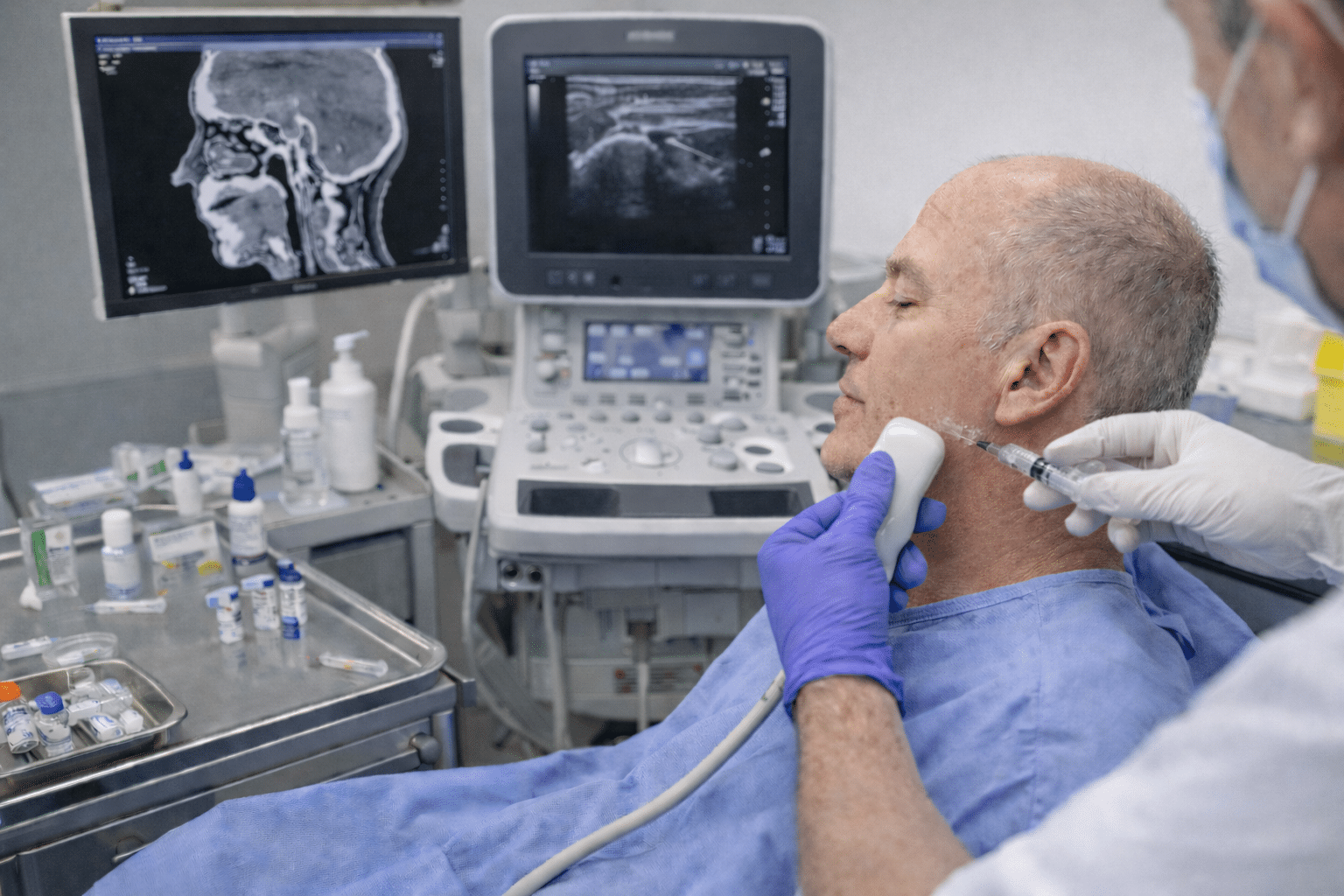
• image-guided diagnostic injections when clinically appropriate
• orthobiologic support in compliant cases
• integrative approaches to regulate nervous system tone
Each option is selected based on how the system is behaving—not just where pain is located.
🟦 LOCAL CARE, GLOBAL SCIENCE
In Fort Wayne, many individuals searching for answers describe symptoms that don’t fit a single category:
• jaw pain with headaches
• TMJ symptoms without clear injury
• facial pain that shifts or spreads
These patterns reflect a broader reality: the problem is rarely just the joint—it’s the system surrounding it.
🟦 E-E-A-T
This content is grounded in systems-based clinical reasoning and current pain science principles. It reflects an understanding that TMJ disorders involve interactions between structure, neurology, and behavior—not isolated pathology.
Evaluation and care decisions are based on individualized assessment, not protocol-driven assumptions.
🟦 DID YOU KNOW
The TMJ is one of the most frequently used joints in the body, engaging during speaking, chewing, swallowing, and even breathing patterns—often thousands of times per day.
🟦 FAQ
Why does jaw pain cause ear symptoms?
The TMJ sits close to the ear canal, and both share nerve pathways. This proximity allows signals to overlap, creating sensations that feel like ear pressure or discomfort.
Can TMJ disorders cause headaches?
Yes. The trigeminal nerve plays a central role in both jaw function and headache pathways, allowing dysfunction in one area to influence the other.
Do all TMJ cases require imaging?
Not necessarily. Imaging may not correlate with symptoms, so clinical evaluation often guides decision-making more effectively.
Is surgery the only solution for TMJ disorders?
In many cases, non-surgical strategies are explored first, particularly when symptoms are driven by functional or neurological factors.
Why does stress affect jaw pain?
Stress can increase muscle tension and alter nervous system regulation, both of which can amplify TMJ-related symptoms.
🟦 AUTHOR BLOCK
STAR Health Clinical Team
Focused on systems-based pain care integrating biomechanics, neurology, and functional medicine principles.
Schedule an evaluation focused on why your jaw pain behaves the way it does.
Contact us for an appointment today!