
🟦 Re-Training Human Locomotion at the System Level
Did you ever wonder why locomotion can suddenly feel tiring, uneven, or strangely unfamiliar—even when no single joint seems badly injured?
Walking looks automatic. Yet human locomotion requires the spine, pelvis, limbs, nervous system, vision, balance organs, and feet to exchange information and manage force with every step. A timing change in one region can alter how another accepts load, causing the body to protect, compensate, or work harder.
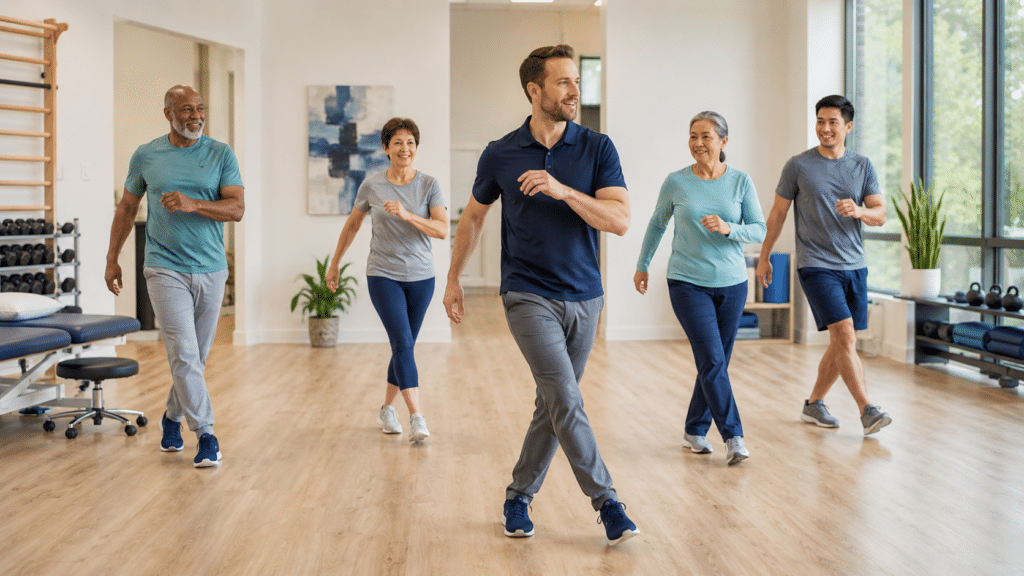
The locomotion class at STAR Health makes that hidden system visible. It is physician-guided movement re-education informed by biomechanics, neuroscience, engineering, and rehabilitation medicine—not generic fitness or a promise to perfect everyone’s stride.
The objective of locomotion retraining is to understand how you move, identify clinically relevant inefficiencies, and develop more coordinated patterns within your abilities and goals.
🟦 How Locomotion Coordinates Structure, Signaling, and Load
The human spine can be understood as part of a locomotive engine: a living system that converts energy and neural instruction into upright, reciprocal locomotion. Walking, running, work, and sport all depend on three elements.
Structure provides the framework. The spine and pelvis rotate, the hips advance, the knees regulate descent, and the feet meet the ground. Each region influences the next.
Signaling organizes the sequence. The nervous system combines input from vision, the vestibular system, joints, muscles, and feet to estimate position, speed, and the next adjustment.
Load is the force the system receives, transfers, stores, and releases. When capacity, timing, or coordination changes, force may concentrate away from the original problem.
That distinction matters. A painful knee may be absorbing a hip or pelvic strategy. Walking fatigue may involve conditioning, pain, balance confidence, neurologic factors, or several influences. The symptom location is a clue—not always the complete explanation.
Locomotion assessment and retraining may be considered for people experiencing:
- Recurrent back, hip, knee, ankle, or foot discomfort
- Gait asymmetry following injury, surgery, or immobilization
- Balance uncertainty or fear of falling
- Repeated overuse symptoms
- Reduced walking or running endurance
- Performance limitations or degenerative changes requiring better load management
These patterns do not prove that gait is the cause. They indicate that movement deserves evaluation within the broader clinical picture.
🟦 Clinical Visualization: What Locomotion Reveals
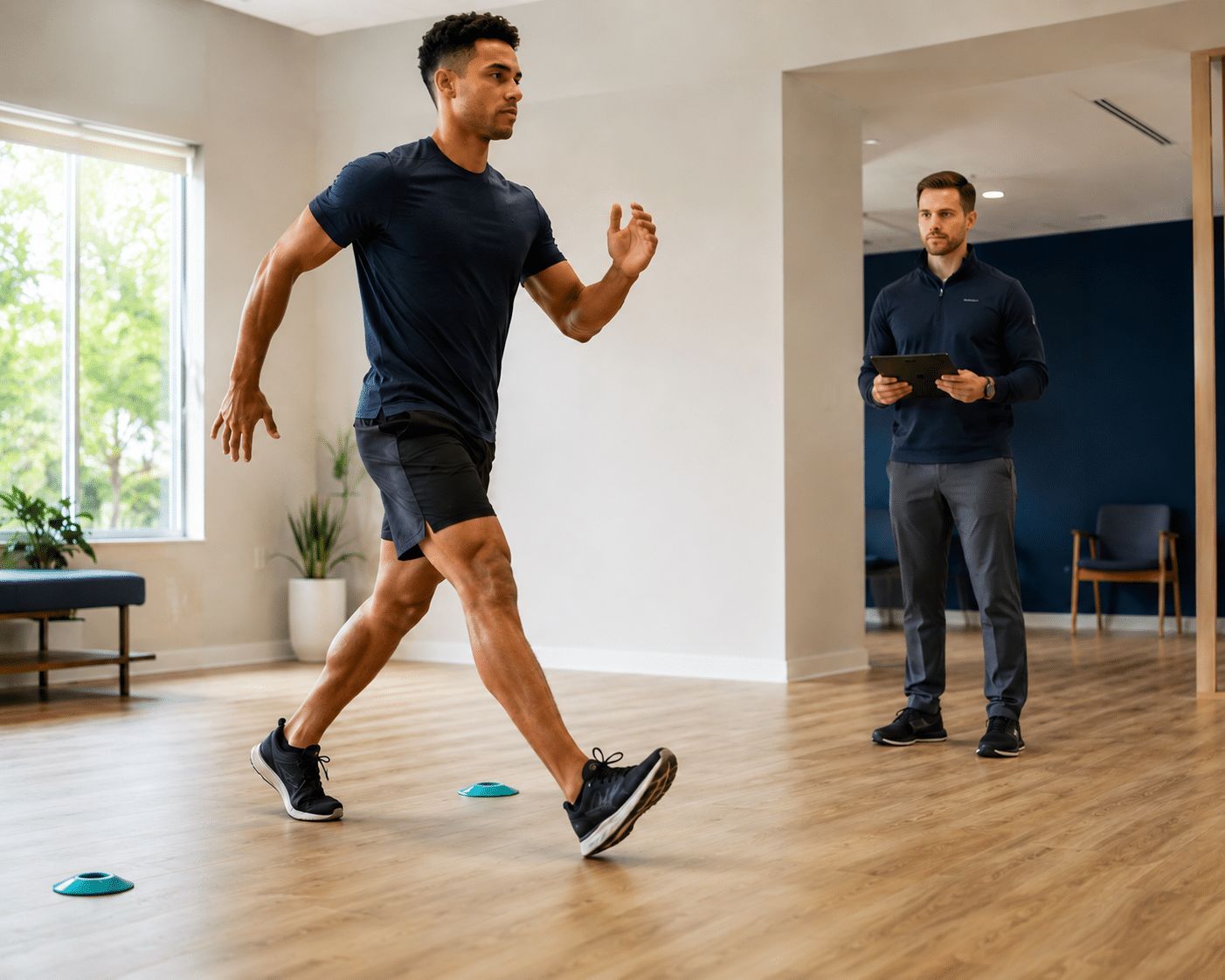
Imagine a participant crossing the room. One foot contacts the floor as the opposite arm advances. The pelvis and upper trunk counter-rotate. Body weight moves forward over one limb before stored energy helps initiate the next step.
Now the head remains rigid, one arm barely swings, or one foot lingers. None of these findings automatically represents disease. Interpreted alongside symptoms, history, examination, and medical findings, however, they may help explain guarded or inefficient movement.
STAR Health may assess gait, posture, balance, symmetry, head-and-eye orientation, and cross-body load transfer, integrating imaging when relevant. The goal is not a textbook stride. It is to determine which variation matters for this person and which does not.
🟦 Clinical Insight: Correction Begins With Verification
Movement can look unusual and remain harmless—or look normal while requiring excessive effort. Correction should therefore follow verification, not assumption.
A diagnostic-first evaluation asks:
- When did the pattern change?
- Does it appear with speed, fatigue, pain, or distraction?
- Is the body protecting a sensitive structure?
- Is balance limited by sensory input, strength, mobility, confidence, or neurologic control?
- Does imaging support the suspected mechanism?
When appropriate, the plan may connect locomotion retraining with musculoskeletal and orthopedic medicine, rehabilitation, balance work, or sports medicine. Rhythmic movement may help explore timing and elastic energy. Other strategies are considered only when diagnosis and context support them.
Participants often begin by noticing automatic habits. A new option may feel awkward before it feels familiar. Practice progresses according to tolerance, safety, and response—not a one-size-fits-all template.
A pooled JAMA analysis of nine cohort studies involving 34,485 community-dwelling adults age 65 and older found gait speed was associated with survival. This does not mean a class can extend life or that gait speed determines health; it shows why a meaningful walking change deserves attention.
The Merck Manual Professional Edition’s clinical review of gait disorders explains that safe walking depends on synchronized neurologic networks involving attention, strength, sensation, and coordination. STAR Health applies that systems principle to locomotion through individualized observation and progression.
Wear comfortable athletic clothing and secure walking shoes. Progress may appear as smoother transitions, greater confidence, improved tolerance, or better participation. Results vary; no response is guaranteed.
🟦 Experience, Expertise, Authority & Trust
Dr. Joseph Fortin (DO) integrates board-certified Physical Medicine & Rehabilitation (PM&R) expertise with subspecialty certification in Interventional Pain Management, alongside recognized experience in regenerative medicine, sports medicine, and integrative medicine—supporting system-level interpretation of imaging, movement, tissue biology, and pain mechanisms to reduce misdirected care.
National and international speaker on biomechanics, human movement, MRI & CT imaging physics, interventional pain management, and regenerative medicine.
This perspective connects findings that may be missed when pain, imaging, balance, and gait are evaluated separately. Recommendations remain diagnosis-driven; intervention is not assumed before the movement problem is understood.
🟦 Local Care, Global Science
People throughout Fort Wayne and Northeast Indiana may seek gait analysis, balance training, movement retraining, or help understanding why walking hurts. The label matters less than the investigation.
STAR Health brings global movement science into local, physician-led care. Locomotion services at STAR Health support adults and athletes with different needs—but the same reliance on structure, signaling, and load.
🟦 Did You Know?
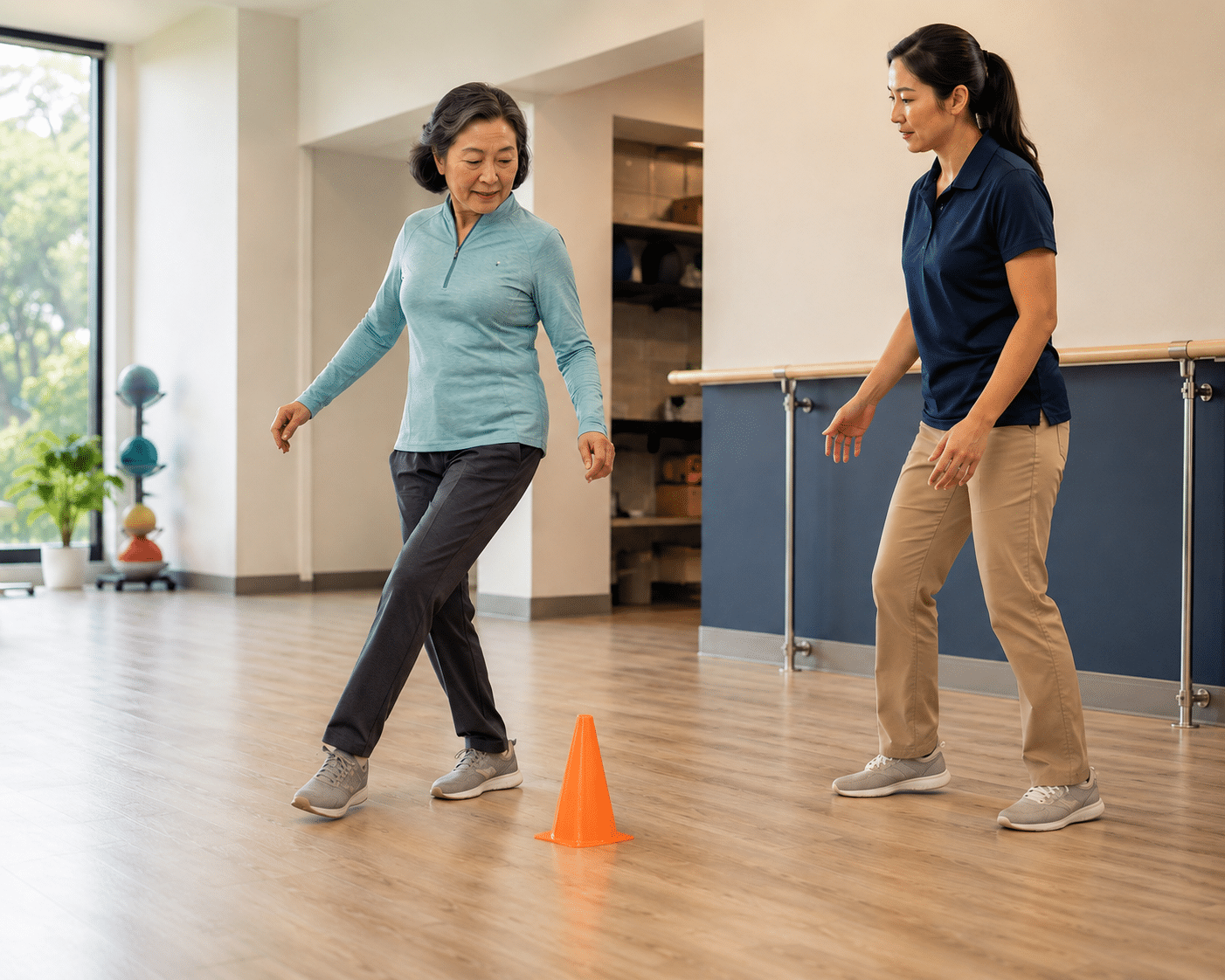
Human walking is sometimes described as controlled or orchestrated falling. The body allows its center of mass to move forward, then catches and redirects that motion through the next limb.
This requires continuous prediction of surface, speed, position, and momentum. Locomotion class slows the process enough for participants to sense—and retrain—parts of the sequence that usually remain invisible.
🟦 Historical Perspective: Making Locomotion Measurable
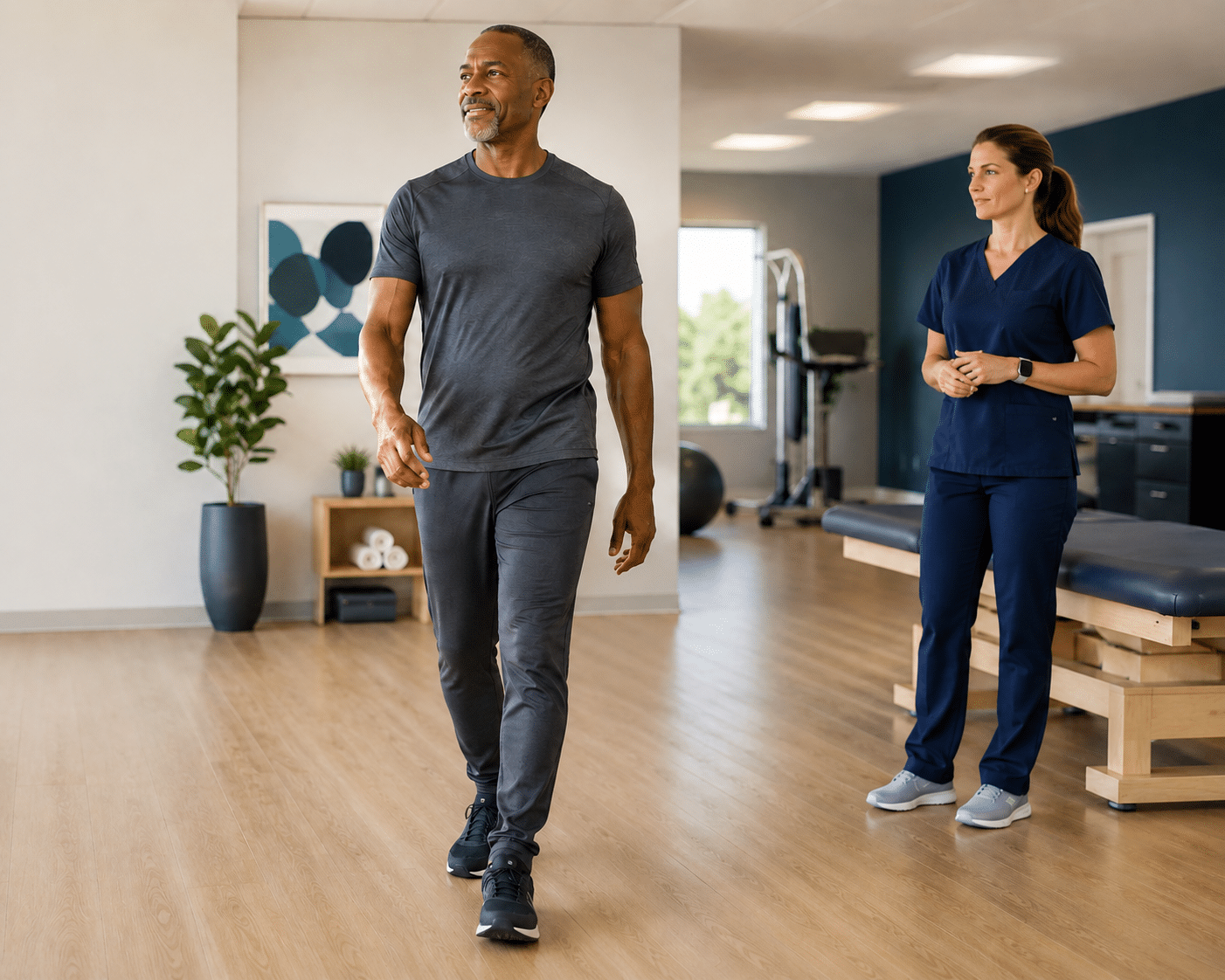
Long before motion laboratories, clinicians and coaches studied how people stood and walked. In the late nineteenth century, sequential photography exposed phases of motion. Force platforms, electromyography, video, and computerized analysis later added measurable detail.
The tools changed, but the central question did not: What does movement reveal about the system producing it?
Modern gait analysis is most useful when measurement remains connected to clinical reasoning. Numbers describe timing or symmetry; they cannot independently explain pain or compensation.
🟦 Frequently Asked Questions
Is locomotion class only for athletes?
No. It is adapted to individual capability and may suit active adults, athletes, older adults, or people rebuilding confidence after injury or reduced activity.
What happens before retraining begins?
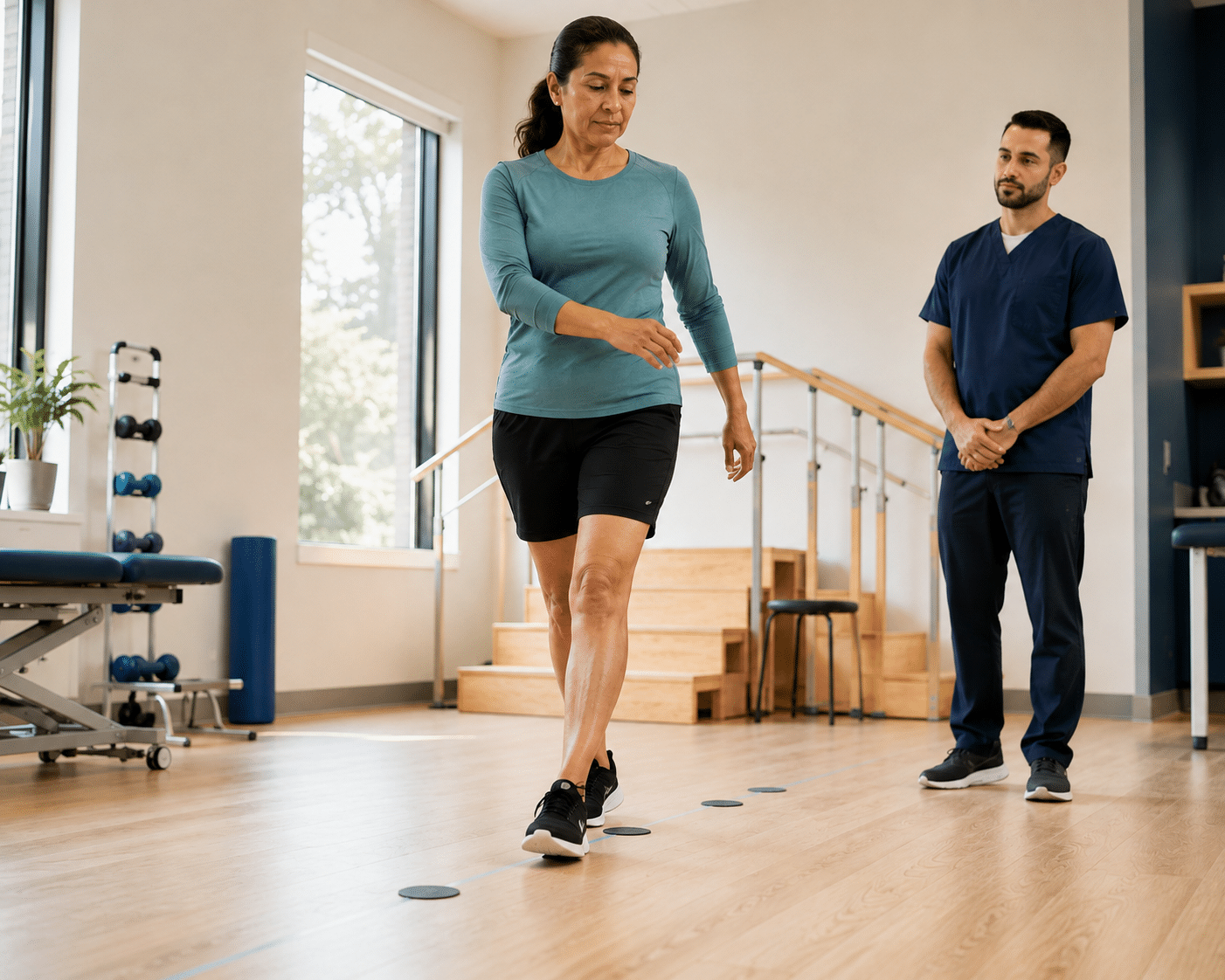
History, symptoms, goals, movement, and medical findings are reviewed. Assessment may include gait observation, balance, posture, symmetry, and load-transfer testing.
Will the movements feel awkward at first?
They may. A familiar compensation can feel normal. New timing may require concentration, but difficulty is not proof that an exercise is correct; response guides adjustment.
Does locomotion class replace physical therapy?
No. It may complement rehabilitation when appropriate. The best sequence depends on the diagnosis, current function, prior care, and goals.
Can gait retraining prevent arthritis or degeneration?
No. It may address modifiable movement and loading factors, but age, injury history, genetics, health conditions, and tissue capacity also influence degeneration.
Is locomotion class appropriate if I have balance problems?
Possibly, but safety and the cause should be evaluated first. Activities follow the participant’s capabilities; some conditions require additional assessment before group participation.
🟦 Rebuild the System Behind Every Step
If walking feels inefficient, unstable, tiring, or “off,” do not guess at the weakest muscle. Understand the system managing the movement.