
Cryolipolysis & Cryo-Lean 360 Targeted Fat Reduction — Integrated With Connective-Tissue Reconditioning
Cryolipolysis in Fort Wayne, Indiana offers a non-surgical approach to reducing localized subcutaneous fat—but reducing a fat pocket is only one part of the body-contouring equation.
At STAR Health, cryolipolysis is approached as a physician-guided body-contouring strategy within a larger tissue system. Adipose tissue, skin quality, connective tissue, anatomy, treatment history, and the patient's goals are considered before treatment begins.
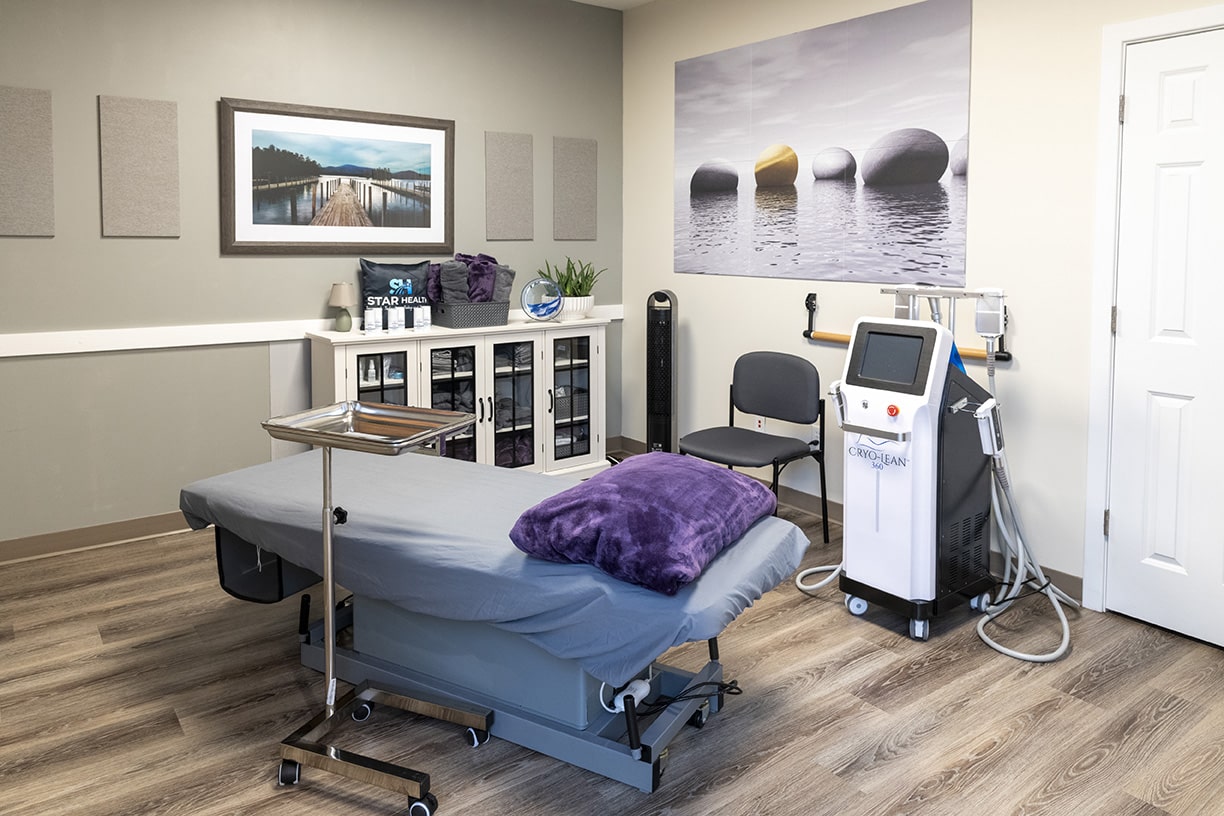
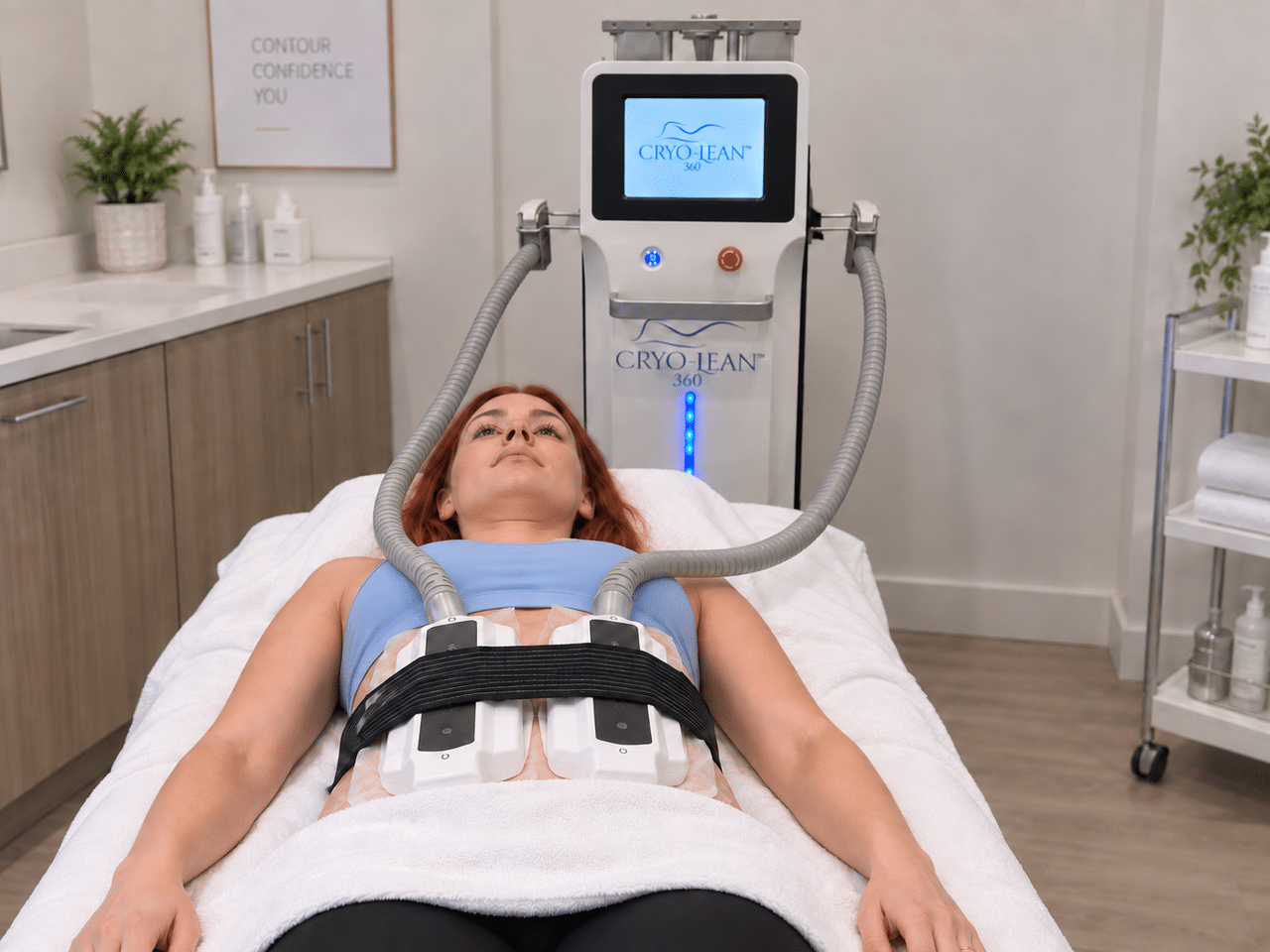
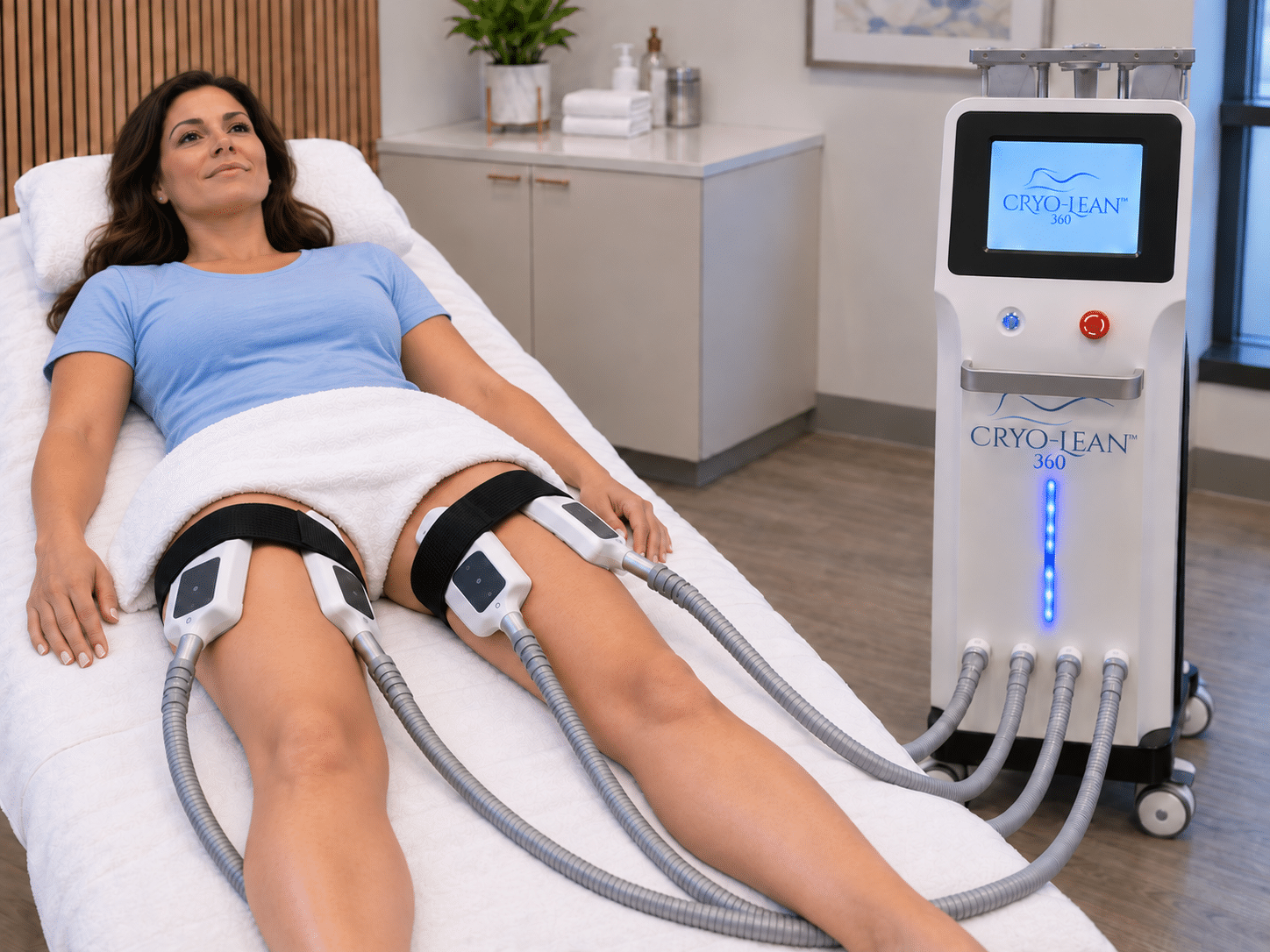
Cryolipolysis is delivered using the Cryo-Lean 360 platform and may be integrated with pulsed or focused shockwave therapy when clinically appropriate as part of a connective-tissue conditioning strategy.
Care is overseen by Dr. Joseph Fortin within STAR Health's diagnostic-first, physician-led model.
📍 Fort Wayne, Indiana
Care Model
- Medical candidacy assessment
- Localized, non-surgical fat reduction
- Tissue-quality assessment
- Individualized treatment planning
- Connective-tissue conditioning when appropriate

🟦Why STAR Health Is Different
Most conversations about fat freezing begin with one question:
How much fat can we reduce?
STAR Health begins earlier.
Is this the right tissue, the right patient, and the right strategy?
That distinction matters because body contour is influenced by more than the thickness of the adipose layer. Skin quality, underlying anatomy, connective tissue, previous procedures, weight stability, and individual tissue characteristics can all influence what a patient sees after treatment.
Our approach therefore:
- Evaluates adipose tissue within a larger mechanical and biologic environment
- Considers skin and connective-tissue characteristics before treatment
- Uses cryolipolysis for localized contouring—not as a substitute for weight management
- May integrate shockwave therapy as a separate tissue-conditioning modality when appropriate
- Uses conservative expectations rather than guaranteed outcomes
- Operates within a medical rather than retail-aesthetic framework
This reflects STAR Health's mission:
To end pain and human suffering through compassionate, research-driven, innovative care.
🟦 Fat Is Not Isolated Tissue
A visible fat pocket may look like an isolated problem.
Biologically, it is not.
Subcutaneous adipose tissue exists beneath skin and within a region containing connective-tissue structures, blood vessels, nerves, and other supporting tissues. Change one component and the visual result still depends on the behavior of the tissues around it.
Cryolipolysis uses controlled cooling to target susceptible fat cells within a treatment area. The resulting cellular injury is followed by gradual clearance over the following weeks and months. The FDA describes cryolipolysis as a non-invasive body-contouring technology intended to reduce visible fat bulges rather than as a weight-loss treatment.
That distinction changes the clinical question.
The objective is not simply to make tissue smaller. It is to determine whether localized fat reduction is likely to improve the patient's contour in a meaningful and appropriate way.


🟦 Clinical Visualization- What Happens After Cooling?
Imagine the treatment area as a layered structure rather than a single pocket of fat.
At the surface is skin. Beneath it is subcutaneous adipose tissue supported by connective-tissue architecture. Deeper structures determine the shape and mechanics of the region.
Cryolipolysis selectively exposes a targeted fat layer to controlled cooling. Over time, affected adipocytes are cleared through the body's biologic response, allowing the treated fat bulge to become smaller. This change develops progressively rather than immediately.
The surrounding contour, however, remains an individual biologic response.
That is why STAR Health evaluates the tissue receiving the treatment—not merely the applicator location.
🟦 Conditions & Goals Addressed
Cryolipolysis may be considered for appropriately selected patients seeking non-surgical treatment of localized subcutaneous fat deposits, including areas such as:
- Abdomen
- Flanks
- Thighs
- Upper arms
- Other anatomically appropriate treatment regions
The strongest candidate is not necessarily the person seeking the largest transformation.
Cryolipolysis is generally better understood as contour refinement rather than generalized weight loss. Evidence reviews have found reductions in localized circumference and fat thickness following treatment, while overall weight reduction is not its primary purpose.
Candidacy and treatment areas are determined individually.
Did You Know?
Cryolipolysis does not suction fat from the body.
Controlled cooling produces injury to susceptible adipocytes, and the resulting cellular material is gradually cleared through the body's biologic processes. Visible change therefore develops over time rather than immediately after the session.
🟦 Advanced Diagonstics & Tissue Assessment
Before treatment, the visible fat pocket needs context.
STAR Health may evaluate:
This assessment also helps identify situations in which cryolipolysis may be inappropriate.
For example, the FDA advises against fat-freezing procedures in patients with certain cold-sensitivity disorders or poor circulation in the treatment area and cautions against treatment near pre-existing hernias or structurally weak abdominal areas.
Good body contouring begins with selection—not application.


🟦 Why Combination Care May Matter
Cryolipolysis
Provides controlled cooling intended to produce localized reduction of subcutaneous adipose tissue.
Focused / Pulsed Shockwave Therapy
Provides mechanical energy to targeted tissue and may be incorporated separately when the clinical goal includes connective-tissue conditioning.
At STAR Health, shockwave is not presented as a guarantee against loose skin or as a required component of every cryolipolysis treatment. Its use depends on tissue assessment, treatment goals, and clinical judgment.
Integrative Strategies
Nutrition, activity, recovery, and overall metabolic health remain relevant to body composition even when the treatment itself is localized.
Rehabilitation When Indicated
Movement and mechanical loading may become relevant when body composition goals overlap with function, physical conditioning, or musculoskeletal care.
Care evolves according to the patient and tissue response—not a preset package.
🟦 Clinical Insight- Fat Reduction Is Not Weight Loss
This distinction is easy to miss.
A person can have a relatively stable body weight and still have a localized fat deposit that changes body contour.
Conversely, treating a localized deposit does not address the systemic drivers of body weight.
A 2025 systematic review and meta-analysis found that cryolipolysis was associated with reductions in several adiposity measurements at approximately three months, while another recent meta-analysis found no statistically significant overall weight reduction.
Cryolipolysis should therefore be understood as localized body contouring—not a substitute for nutrition, exercise, metabolic care, or medically indicated weight-management treatment.
🟦 Safety, Expectations & Informed Decision-Making
Non-surgical does not mean risk-free.
Temporary redness, bruising, swelling, discomfort, numbness, and changes in sensation can occur after cryolipolysis. Systematic reviews generally describe the procedure as well tolerated, but adverse effects remain possible.
A particularly important uncommon complication is paradoxical adipose hyperplasia (PAH), in which the treated area enlarges rather than becoming smaller. The FDA notes that PAH can appear months after treatment, does not resolve spontaneously, and may require surgery. Freeze burns and other complications are also possible.
For STAR Health, informed care means discussing benefits, limitations, alternatives, and meaningful risks before treatment.
🟦E-E-A-T | Physician-Guided Systems Interpretation
Dr. Joseph Fortin (DO) integrates board-certified Physical Medicine & Rehabilitation (PM&R) expertise with subspecialty certification in Interventional Pain Management, alongside recognized experience in regenerative medicine, sports medicine, and integrative medicine—supporting system-level interpretation of imaging, movement, tissue biology, and pain mechanisms to reduce misdirected care.
National and international speaker on biomechanics, human movement, MRI & CT imaging physics, interventional pain management, and regenerative medicine.
The purpose of physician oversight is not to make a cosmetic procedure sound more complex.
It is to reduce misdirected treatment through better candidacy assessment, anatomy awareness, expectation setting, and clinical judgment.
🟦From Discovery to Modern Body Contouring
Cryolipolysis developed from observations that adipose tissue responds differently to cold exposure than surrounding tissues.
That biological observation eventually led to controlled-cooling technologies designed to selectively affect subcutaneous adipocytes without surgical removal.
Modern research supports measurable localized fat reduction, although studies vary in methodology, treatment area, follow-up, and outcome measurement. Researchers continue to call for stronger long-term and comparative evidence.
The technology has evolved.
The need for appropriate patient selection has not.
🟦 What Patients Can Expect
Treatment begins with evaluation rather than an automatic procedure.
Patients can expect:
- Medical candidacy assessment
- Identification of realistic treatment areas
- Discussion of expected timing and limitations
- Protocol-guided cryolipolysis when appropriate
- Consideration of complementary tissue-conditioning strategies
- Conservative, staged planning
- Clear expectations without guaranteed results
The number of sessions and combination strategy depend on anatomy, goals, device parameters, and response.
FAQ
No. Cryolipolysis is intended for localized fat reduction and body contouring, not generalized weight loss.
Clinical studies and systematic reviews show measurable reductions in localized subcutaneous fat in appropriately selected treatment areas. Individual results vary, and long-term evidence is less extensive than short-term outcome data.
STAR Health may use shockwave separately as a connective-tissue conditioning strategy when clinically appropriate. It is not required for every patient, and it should not be interpreted as a guarantee against skin laxity.
Cryolipolysis is non-invasive and generally well tolerated, but it has recognized risks. Temporary discomfort, swelling, bruising, redness, and numbness may occur. Less common complications include freeze burns and paradoxical adipose hyperplasia.
There is no universal session count. Treatment planning depends on the area, amount and distribution of subcutaneous fat, individual goals, device parameters, and response
No. Cryolipolysis targets localized fat and does not replace nutrition, physical activity, metabolic health strategies, or medically appropriate weight management.
Using the latest technology in regenerative medicine, Dr. Fortin offers innovative injections, including stem cell therapy and platelet-rich plasma (PRP) therapy. These injections may be recommended to support healing and provide long-term pain relief.
If localized fat persists despite lifestyle efforts, the next step does not have to be surgery—or an automatic cosmetic package.
A systems-based evaluation can help determine whether cryolipolysis is appropriate, which areas are reasonable to treat, and whether complementary connective-tissue conditioning should be considered.
📍 STAR Health — Fort Wayne, Indiana
🕒 Time-rich, physician-led consultation
📞 Schedule your evaluation today