
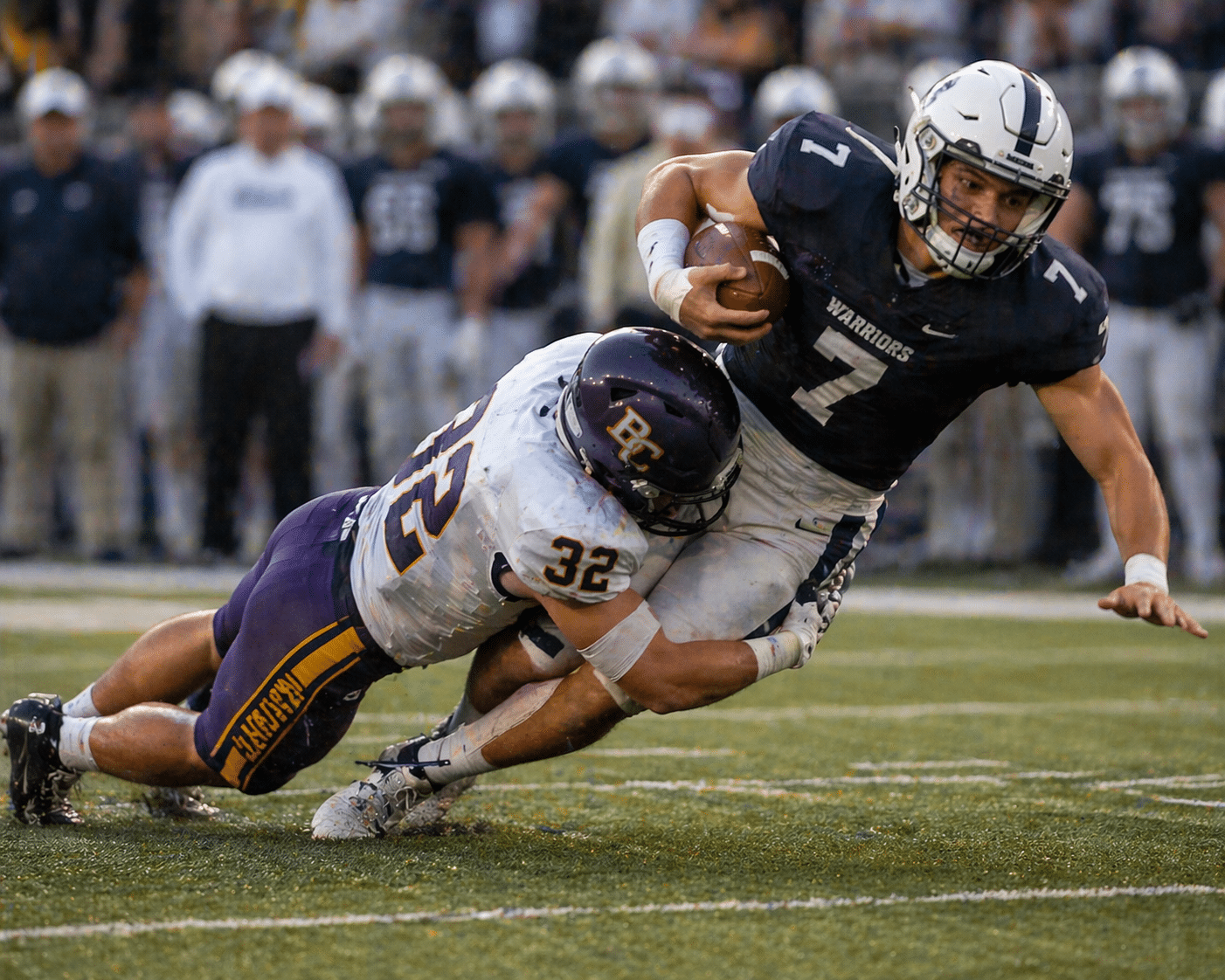
Did you ever wonder why an athlete can heal from an injury, return to training, and then break down again—sometimes in exactly the same place, and sometimes somewhere completely different?
Athletic injuries can be frustrating, especially when they persist despite treatment. At first glance, it seems confusing. The tissue healed. The rehabilitation program was completed. The athlete was cleared to play.
Yet the problem returns.
This pattern is rarely explained by bad luck, poor motivation, or a lack of physical toughness. In many cases, the injury itself was never the true beginning of the story.
Some athletic injuries require specialized rehabilitation techniques for complete healing.
From a systems perspective, most athletic injuries represent the final visible consequence of a much longer process occurring beneath the surface. By the time pain appears, the body has often spent weeks, months, or even years adapting to inefficient force distribution, altered movement strategies, and accumulating mechanical stress.
Many athletes experience recurrent athletic injuries despite seeming recovery. The injury is simply where the system finally ran out of options. The persistence of athletic injuries highlights the need for a system-wide approach. Understanding athletic injuries requires a comprehensive view of how the body reacts to stress.
At STAR Health in Fort Wayne, athletic injuries are evaluated as mechanical and biological outcomes emerging from how forces are generated, transferred, absorbed, and recovered across the body over time. Rather than asking only what tissue failed, the more important question is often why that tissue was forced to fail in the first place.
Pain is the signal.
The system is the story.
Athletic Injuries Occur Where Stress Concentrates — Not Where Failure Begins
In the context of athletic injuries, stress can accumulate leading to severe consequences.
Recognizing the signs of athletic injuries is key for early intervention. Most engineered systems do not fail at their strongest points. Identifying the root cause of athletic injuries is essential for long-term recovery. Common sources of athletic injuries include poor biomechanics and repetitive strain. Research indicates that understanding athletic injuries leads to better recovery strategies.
Bridges fail at stress junctions.
Machines fail at transition zones.
Buildings crack where loads concentrate.
The human body follows the same principles.
Athletic injuries not only affect performance but may influence career longevity. Without addressing the underlying issues, athletic injuries are likely to return.
Areas commonly affected by athletic injury include:
• Tendon insertions
• Ligament transition zones
• Joint interfaces
• Disc-endplate junctions
• Neurovascular tunnels
These locations frequently experience injury because they absorb forces originating elsewhere in the system.
This perspective helps explain several observations that often confuse athletes:
• Imaging severity does not always match symptom severity
• Localized treatment may provide only temporary relief
• Injuries often migrate following otherwise successful rehabilitation
• Pain may appear far from the original mechanical problem
The injured structure is frequently the victim of accumulated stress rather than the source of dysfunction.
Understanding where stress concentrates is important. Understanding why it concentrates there is often more important. Effective treatment of athletic injuries includes a comprehensive assessment of movement patterns.
Movement Is the Primary Load Distributor
Many athletes must adapt their routines to manage previous athletic injuries. Muscles serve a role far beyond creating movement. Education about athletic injuries can empower athletes to prevent future problems. Addressing both physical and mental aspects is crucial in treating athletic injuries. They function as dynamic load-management systems. Addressing athletic injuries requires understanding their complex origins.
During efficient movement:
• Muscles absorb force
• Tendons store and release elastic energy
• Joints guide motion
• The nervous system coordinates timing
When this coordination remains intact, stress is distributed across large biological networks. Athletic injuries should be treated as part of a larger biomechanical issue. When movement efficiency begins to deteriorate, the distribution pattern changes. Small alterations in mobility, timing, stability, or coordination can create disproportionately large increases in tissue stress.
The result is predictable:
• Passive structures absorb excessive load
• Tendons experience repetitive microtrauma
• Joint surfaces become irritated
• Nerves become increasingly sensitized
Preventive strategies are essential to minimize the impact of athletic injuries.
Athletes frequently respond by training harder, stretching more aggressively, or strengthening the painful area. Mitigating athletic injuries involves improving overall movement quality. Unfortunately, increased effort cannot compensate indefinitely for inefficient mechanics. Failure to address the systemic causes of athletic injuries can lead to chronic issues. Chronic athletic injuries can lead to mental health challenges for many athletes.
The body compensates until compensation itself becomes the problem.
Clinical Visualization: The Hidden Injury Timeline
Consider a distance runner who develops Achilles tendon pain.
The tendon may appear to be the source of the problem, yet the actual sequence may have begun much earlier:
• Reduced hip mobility alters stride mechanics
• Pelvic control decreases during stance phase
• Ground reaction forces shift
• Calf musculature absorbs additional load
• Achilles stress accumulates
• Tendon degeneration develops
• Pain finally appears
By the time symptoms emerge, the system has already adapted around dysfunction for months.
The tendon did not suddenly fail, it simply became the location where accumulated stress became impossible to ignore.
A Historical Observation That Still Holds True
Long before modern sports medicine existed, physicians recognized that injury patterns reflected more than isolated trauma.
In the second century, Galen of Pergamon documented observations suggesting that athletic breakdown frequently followed disturbances in coordinated motion rather than direct injury alone.
Centuries later, anatomists studying laborers, military recruits, and competitive athletes noticed a similar trend. Degeneration clustered at mechanical transition zones.
Damage appeared where forces converged, not necessarily where forces originated. Modern biomechanics, motion analysis, and neuromuscular research continue to support these observations. Localized injury often reflects distributed mechanical dysfunction occurring throughout the system.
Sports medicine did not invent systems thinking.
It rediscovered it.
Many athletes require ongoing support to manage their athletic injuries effectively.
Imaging Shows Structure — Not Load History
Advanced imaging remains one of the most valuable tools in sports medicine.
MRI, ultrasound, CT imaging, and radiography provide important information regarding:
• Structural integrity
• Tissue quality
• Degeneration patterns
• Inflammatory changes
• Healing status
However, imaging has limitations.
Athletic injuries can often be prevented through proper training and conditioning.
It cannot reveal:
• Force direction
• Cumulative loading history
• Neuromuscular timing
• Compensation strategies
• Movement efficiency
This limitation explains why two athletes with nearly identical MRI findings may have dramatically different experiences.
One performs at a high level.
The other struggles with daily activity.
Incorporating strength training can mitigate the risk of athletic injuries. Structure alone rarely tells the entire story.
At STAR Health, imaging findings are interpreted within the context of movement analysis, clinical examination, and load-management evaluation.
Structure matters. Context matters more.
Addressing the mechanics behind athletic injuries can prevent recurrence.
Clinical Insight
Athletic injuries most often reflect inefficient force distribution and neuromuscular timing errors rather than isolated tissue weakness.
Treating only the painful tissue may reduce symptoms temporarily.
Identifying the underlying loading strategy is what helps explain why symptoms developed in the first place.
Why Treating the Injury Alone Often Fails
When care focuses exclusively on the injured structure, several things can happen.
Pain decreases.
Inflammation improves.
Strength returns locally.
The athlete feels better.
Yet if the underlying movement drivers remain unchanged, the original stress pattern frequently returns.
This creates a familiar cycle:
• Load redistributes inefficiently
• Adjacent tissues become overloaded
• New symptoms develop
• Injury recurs
This pattern is commonly seen with:
• Recurrent hamstring strains
• Chronic Achilles tendinopathy
• Patellar tendon pain
• Rotator cuff injuries
• Hip flexor strains
• Lumbar spine pain
The system adapts around pain.
Eventually it fails somewhere else.
The Spine and Pelvis: Central Load Managers
The spine and pelvis function as the body’s primary transmission system.
Every athletic movement depends on their ability to coordinate:
• Force generation
• Energy transfer
• Neurologic timing
• Limb synchronization
When spinal or pelvic mechanics become compromised, inefficiencies propagate throughout the entire kinetic chain.
Common consequences include:
• Force leakage
• Asymmetric loading
• Altered muscle recruitment
• Reduced energy transfer
• Increased peripheral tissue stress
Sports medicine approaches that focus only on the painful body part often miss these central contributors.
The result is repeated treatment without lasting resolution.
E-E-A-T: Physician-Led Systems Evaluation
At STAR Health, sports injury evaluation extends beyond identifying damaged tissue.
Assessment includes consideration of:
• Biomechanics
• Movement efficiency
• Load distribution
• Neurologic regulation
• Recovery capacity
• Structural findings
This physician-led approach allows injuries to be interpreted within the larger context of athletic performance and tissue adaptation.
The objective is not simply symptom reduction.
The objective is understanding the system that produced the symptom.
A Striking Observation From Amputation Science
One of the most fascinating examples of systems-based locomotion comes from hip-disarticulation amputees. Some younger individuals can demonstrate surprisingly efficient gait patterns despite the complete absence of a hip joint. Effective communication about athletic injuries can lead to better outcomes. This observation challenges traditional assumptions regarding movement.
Why does walking remain possible?
Because locomotion depends heavily on:
• Pelvic coordination
• Spinal control
• Neuromuscular timing
• Force management
Understanding the biomechanics of athletic injuries helps in crafting effective recovery plans. Improving recovery strategies for athletic injuries involves collaboration among practitioners. When these systems remain functional, movement efficiency can be preserved despite major structural loss. Understanding the unique demands of each sport can inform approaches to athletic injuries.
Conversely, intact anatomy cannot fully compensate for significant dysfunction within the central movement system.
Did You Know?
Did you know?
Performance assessments can help identify risks related to athletic injuries.
Large cohort studies have repeatedly shown that athletes with similar imaging findings often report dramatically different pain levels and performance capabilities.
Movement efficiency, force distribution, and load symmetry frequently predict long-term outcomes more accurately than structural severity alone.
Local Care, Global Science
Athletes throughout Fort Wayne and Northeast Indiana often search for answers after repeated setbacks.
Common questions include:
• Why does my sports injury keep coming back?
• Why does pain move from one area to another?
• Can movement problems cause recurring injuries?
• Are there non-surgical options for athletic recovery?
STAR Health combines principles from biomechanics, neuroscience, rehabilitation, and advanced musculoskeletal medicine to help athletes better understand how injuries develop and why some continue to recur.
This is local care informed by global science.
Historical Perspective
Throughout medical history, the most enduring advances have come from shifting focus away from isolated symptoms and toward interconnected systems.
Athletic injury care is no exception.
As our understanding of biomechanics and neuromuscular control continues to evolve, the evidence increasingly supports a broader view:
The injured tissue is often where the problem appears.
The system is where the explanation lives.
FAQ
Why do sports injuries keep coming back?
Recurring injuries often occur when underlying movement inefficiencies, loading patterns, or biomechanical factors remain unchanged after symptoms improve.
Can a healed injury still cause future problems?
Yes. Even after tissue healing occurs, altered movement strategies may persist and continue placing excessive stress on nearby structures.
Does MRI always explain athletic pain?
No. MRI provides structural information but cannot reveal movement quality, force distribution, or neuromuscular timing.
What is systems-based sports medicine?
Systems-based sports medicine evaluates how the entire body generates, transfers, absorbs, and recovers from physical loads rather than focusing solely on the injured area.
Can biomechanics influence injury risk?
Research consistently shows that movement efficiency and load distribution play significant roles in injury development and recurrence.
When should an athlete seek a sports medicine evaluation?
Athletes should consider evaluation when injuries recur, recovery stalls, performance declines, or symptoms migrate despite appropriate treatment.
If injuries continue to return despite rest, therapy, or previous treatment, it may be time to evaluate the system surrounding the injury rather than focusing solely on the injury itself.
Find the system failure.
Protect performance.
Restore durability.
Contact us to schedule a consultation today!