
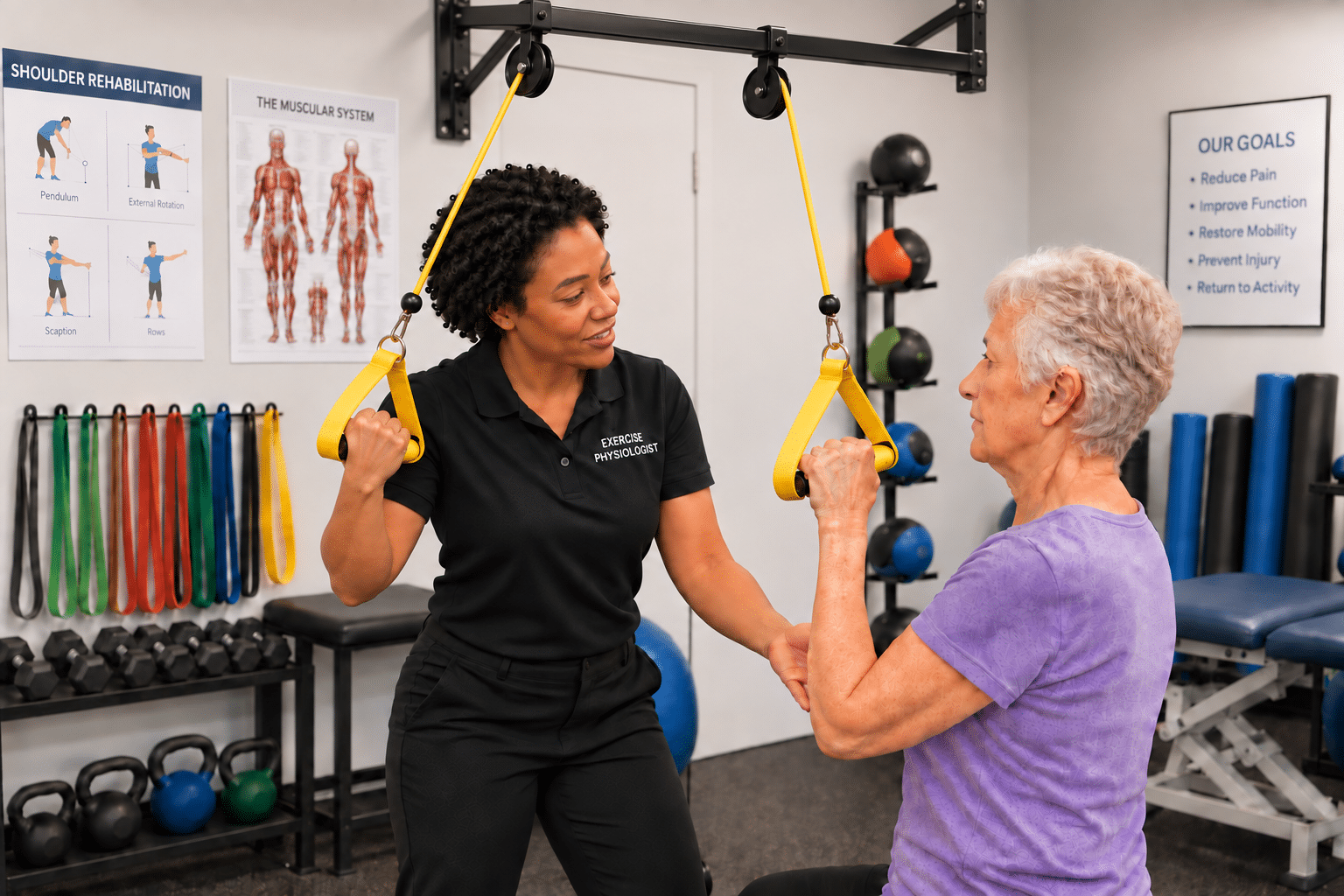
Physical Rehabilitation at STAR Health in Fort Wayne, IN
A shoulder keeps tightening. A knee begins hurting again. Back pain returns after another round of exercises.
The natural question is: Why didn’t rehabilitation hold?
Sometimes the problem is not effort, motivation, or even the exercise program itself. The missing piece may be a pain generator that was never confirmed, a movement pattern that continued shifting load, or a nervous system that remained protective long after the original injury.
Physical rehabilitation at STAR Health is the clinical process of restoring movement efficiency, neuromuscular timing, tissue tolerance, and confidence after injury, illness, surgery, or accumulated physical stress.
Care begins with investigation—not a predetermined protocol.
- Physician-directed rehabilitation planning
- Movement, load, and neurologic evaluation
- Imaging interpreted in functional context
- Coordination with diagnostic and interventional care when appropriate
📍 Fort Wayne, Indiana
🟦 The System Behind the Symptom
Pain often feels local. Dysfunction rarely is.
A painful knee may be absorbing force created by limited ankle mobility or poor hip control. Shoulder symptoms may reflect altered scapular timing, trunk weakness, or irritation elsewhere along a nerve pathway. Persistent back pain may involve tissue sensitivity, inefficient load transfer, fatigue, and protective movement occurring together.
STAR Health evaluates three interacting elements:
- Structure: joints, muscles, tendons, fascia, nerves, and supporting tissues
- Signaling: neurologic coordination, pain processing, proprioception, and muscular timing
- Load: how force is produced, transferred, absorbed, and repeated
Rehabilitation becomes more precise when these relationships are understood. The goal is not simply to make an isolated body part stronger. It is to determine where the system loses efficiency and rebuild its ability to tolerate real-life demands.
That may mean changing an exercise, addressing another body region, modifying activity, or pausing rehabilitation until the diagnosis is clearer.
🟦 Clinical Visualization
When the Painful Area is Not the Starting Point
Picture someone walking upstairs with persistent knee pain.
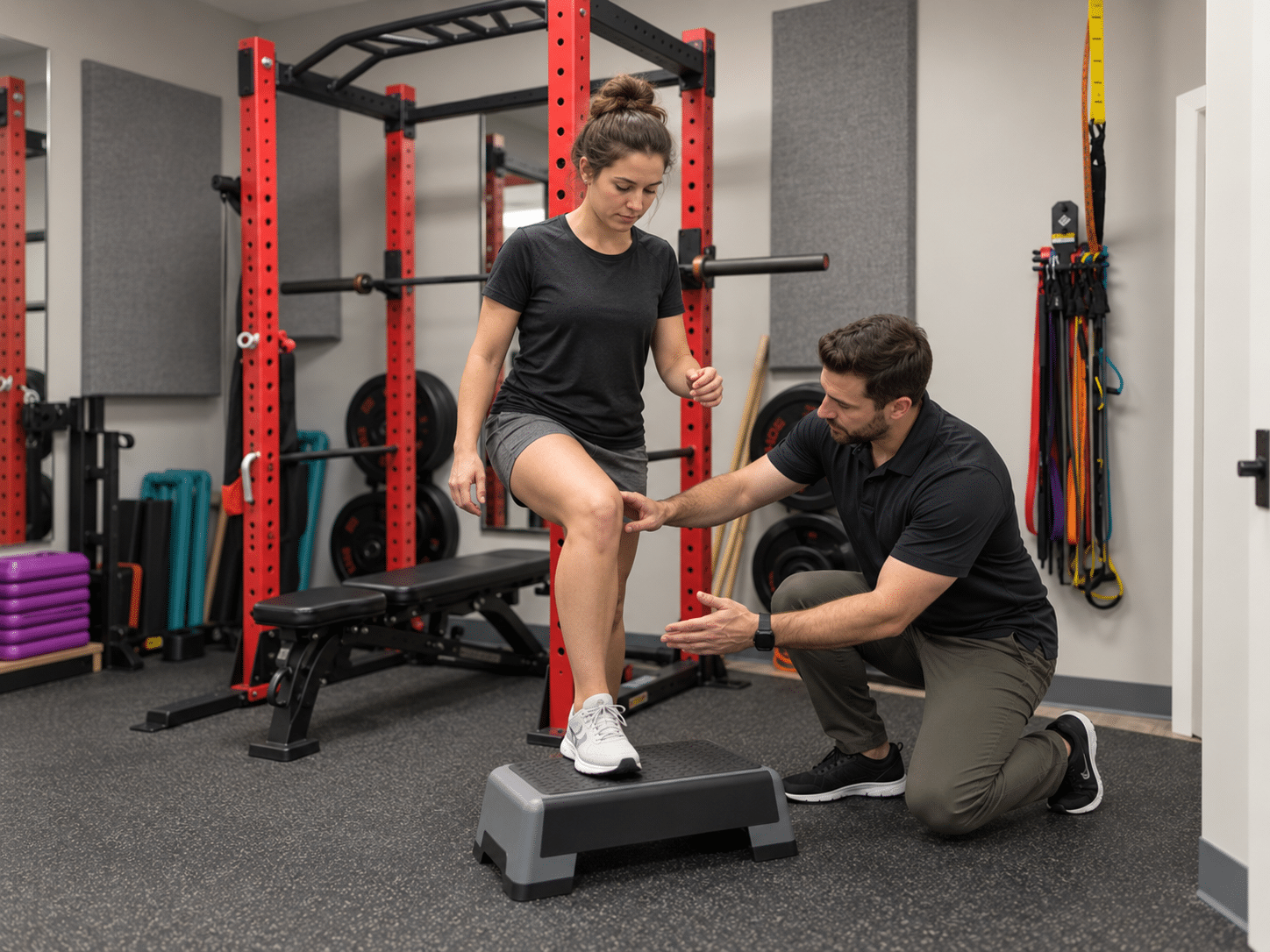
The knee appears to be the obvious problem. During evaluation, however, the foot remains rigid, the pelvis drops, and the trunk shifts with every step. The knee is painful—but it may also be the place where forces from several upstream and downstream failures finally collide.
This changes the clinical question from “Which knee exercises should be prescribed?” to:
Why is the knee carrying this load, and what must change so it no longer has to?
That distinction can determine whether rehabilitation becomes another temporary cycle or a coordinated path toward more durable function.
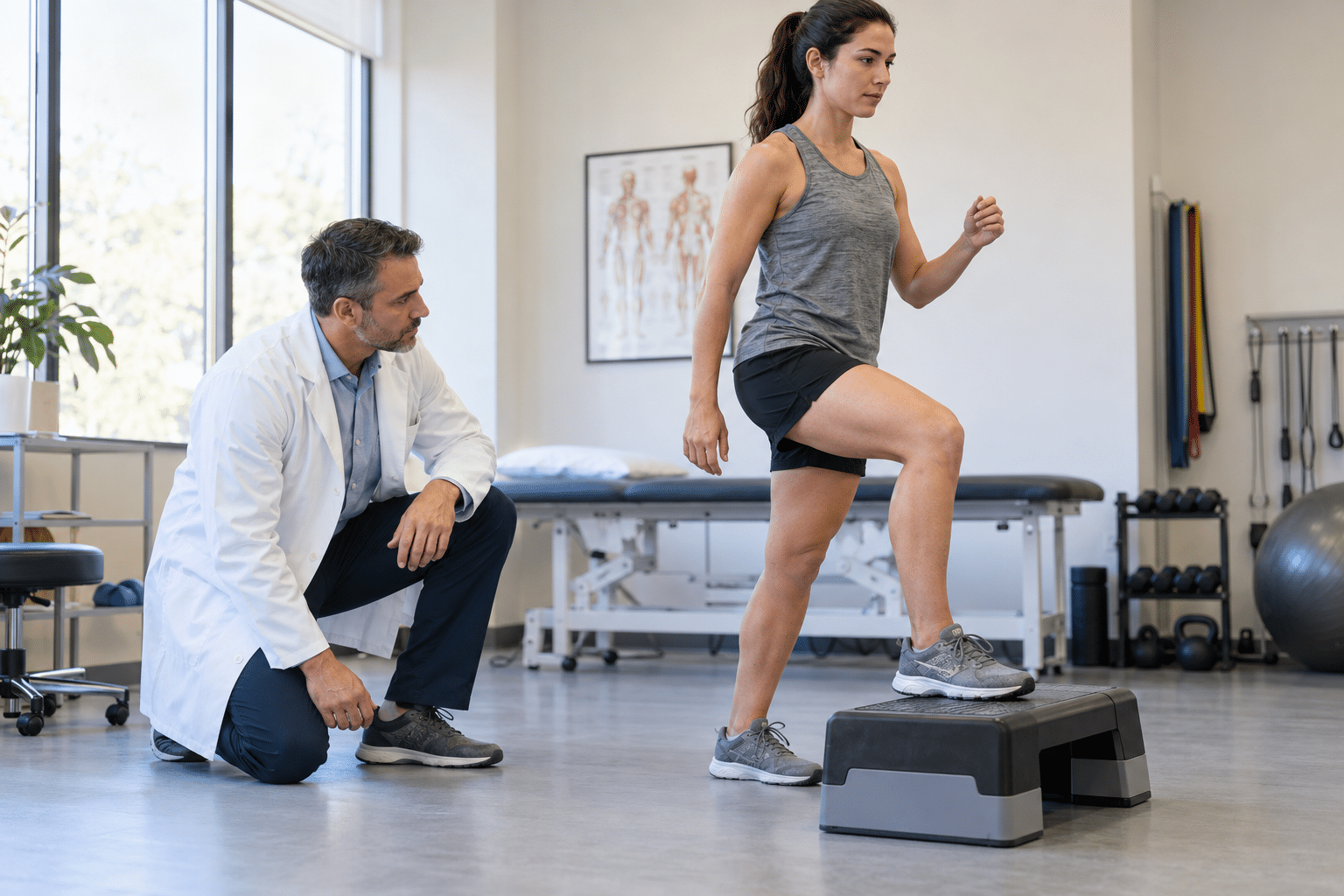
🟦 Clinical Insight: Rehabilitation Must Be Verified
Before prescribing physical rehabilitation, the clinical team may evaluate gait, balance, strength, coordination, joint motion, fatigue patterns, neurologic function, and task-specific mechanics.
When appropriate, evaluation may also include:
- Review of MRI, CT, X-ray, or prior medical records
- Dynamic musculoskeletal ultrasound
- Electrodiagnostic or focused neurologic assessment
- Load-tolerance and movement testing
- Diagnostic injections to help confirm a suspected pain generator
A diagnosis cannot be reduced to an imaging report. A structural finding may be important, incidental, or only one part of the problem. The examination must determine whether the finding actually matches the symptoms and functional pattern.
Rehabilitation may address the:
- Head, jaw, and cervical–cranial system
- Neck, shoulder, elbow, wrist, and hand
- Chest, ribs, and abdominal wall
- Back, spine, sacrum, and coccyx
- Hip, pelvis, and groin
- Knee, ankle, and foot
- Gait, balance, and whole-body coordination
Treatment may stand alone or operate within a broader plan. When a verified pain generator prevents progress, interventional pain management may be considered. When compromised tissue biology is relevant, carefully selected regenerative medicine strategies may support—not replace—appropriate loading and rehabilitation.
Care evolves as the system responds. Progress is measured through function, tolerance, movement quality, and the ability to perform meaningful activities—not pain scores alone.
🟦 E-E-A-T: Rehabilitation Grounded in Function
The American Academy of Physical Medicine and Rehabilitation explains that PM&R is centered on restoring functional ability and quality of life across conditions involving the brain, spinal cord, nerves, bones, joints, ligaments, muscles, and tendons. General Authority: AAPM&R — About Physical Medicine & Rehabilitation aapmr.org
Evidence also supports exercise as part of care for many patients, but exercise is not a universal prescription. A Cochrane review found that exercise therapy can improve pain and functional limitations in adults with chronic nonspecific low back pain, while program selection and individual response remain important. Specific Citation: Exercise Therapy for Chronic Low Back Pain PubMed
At STAR Health, evidence informs the plan. Diagnosis determines how that evidence is applied.
🟦 Author and Clinical Oversight
Written under the clinical direction of Dr. Joseph Fortin, DO
Dr. Fortin practices at the intersection of osteopathic medicine, Physical Medicine & Rehabilitation, interventional pain management, regenerative medicine, sports medicine, integrative medicine, and applied imaging science.
His background includes board certification in Physical Medicine & Rehabilitation, subspecialty certification in Interventional Pain Management, board certification in Electrodiagnostic Medicine, certification in Clinical Densitometry, formal training and compliant clinical application of regenerative medicine, and integrative medicine expertise addressing nervous system amplification, recovery biology, and load tolerance.
He is a sports medicine physician, editor of a sports medicine text, author of peer-reviewed medical literature, patent holder for a biomechanically focused surgical-table design, and a national and international speaker on biomechanics, human movement, imaging physics, interventional pain management, and regenerative medicine.
This convergence supports system-level clinical decisions that integrate imaging, movement, tissue biology, and neural signaling to reduce misdiagnosis and misdirected care.

🟦 Did You Know?
Two people can have similar findings on an MRI yet experience very different levels of pain and limitation.
Imaging shows structure at a moment in time. It does not fully reveal movement efficiency, load distribution, tissue tolerance, or nervous-system sensitivity. Those relationships must be examined clinically.
Local Care, Global Science
Patients throughout Fort Wayne and Northeast Indiana often arrive after therapy produced incomplete or temporary improvement.
STAR Health applies global principles from rehabilitation science, biomechanics, imaging, and neuroscience within a local, physician-directed model. Initial evaluations are intentionally time-rich because complex dysfunction rarely reveals itself through one test or one painful location.
The objective is straightforward: understand the failure before prescribing the rebuild.
A Historical Shift Toward Function
Rehabilitation medicine developed around an important change in medical thinking: treating disease or injury was not enough if the person could not return to meaningful function.
That principle still matters. Modern rehabilitation combines anatomy with biomechanics, neuroscience, recovery biology, and lived activity. The central question is no longer only, “What tissue is injured?”
It is also: “What is preventing this person from functioning?”
Frequently Asked Questions
Physical rehabilitation may use therapeutic exercise and movement strategies also found in physical therapy. At STAR Health, the difference is the physician-directed, diagnostic-first framework used to determine whether rehabilitation is appropriate and what the program must address.
Previous therapy provides useful clinical information. The evaluation examines whether the diagnosis was incomplete, the load was poorly matched, another body region was influencing symptoms, or pain prevented meaningful progression.
Not automatically. Imaging is used when it can clarify the diagnosis, evaluate a suspected condition, or change the treatment plan. It is interpreted alongside the examination rather than in isolation.
No. Rehabilitation is recommended only when it matches the diagnosis and the patient can participate safely. Additional diagnostic work or another treatment may need to come first.
Appropriate rehabilitation may improve function and sometimes reduce or delay the need for invasive care. Surgery avoidance cannot be guaranteed, and some conditions still require surgical consultation.
There is no universal timeline. Duration depends on the diagnosis, tissue capacity, chronicity, neurologic involvement, recovery health, goals, and response to progressive loading. The plan is reassessed as function changes.
Rebuild Function with a Clearer Diagnosis
When pain persists despite therapy, repeating the same approach may not be the answer.
The system deserves reevaluation.
📍 STAR Health — Fort Wayne, Indiana
🕒 Time-rich, physician-directed evaluation
📞 Schedule a comprehensive physical rehabilitation assessment