Physical Therapy Not Working? Why the System Matters
Why the Problem May Be the System—Not the Exercise
Fort Wayne, Indiana
Did physical therapy feel helpful at first—only for the pain, stiffness, or instability to return after treatment ended?
That pattern can be discouraging. It may also contain an important clue.
The problem is not always effort, motivation, or the quality of the exercises. Sometimes the system failure driving the symptoms was never fully identified.
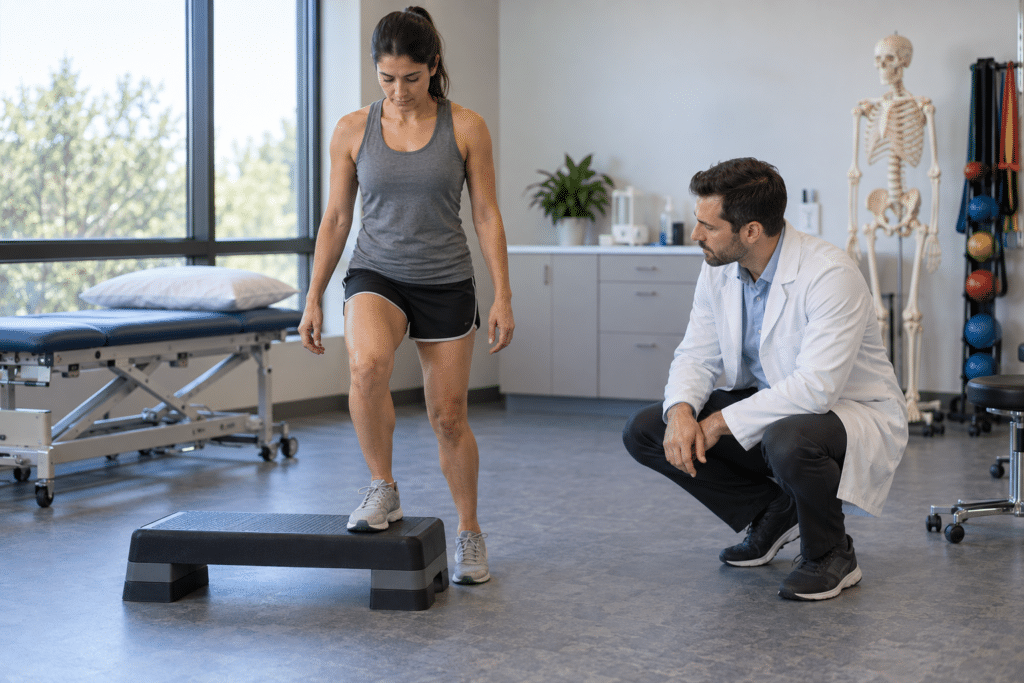
At STAR Health, physical rehabilitation is not treated as a generic prescription. It can also function as a diagnostic process—revealing how structure, movement, load tolerance, tissue biology, and nervous-system signaling interact over time.
When physical therapy is not working, the answer may not be more exercise.
The answer may be a better diagnosis.
Rehabilitation Tests the System
Exercise introduces a controlled demand. The body’s response shows whether the system can tolerate, distribute, and recover from that demand.
When symptoms repeatedly return, several possibilities must be considered:
Load may be directed toward the wrong structure
Muscles may be strong but firing at the wrong time
A joint may be compensating for restricted movement elsewhere
Tissue capacity may not match the prescribed intensity
The nervous system may remain protective or sensitized
In those situations, increasing repetitions can rehearse the same dysfunction more efficiently.
True rehabilitation begins with a different question:
What is the system failing to tolerate—and why?
That question moves the investigation beyond the painful body part. It examines three connected variables:
Structure: the tissues receiving or transferring force
Signaling: the neurologic timing and interpretation of movement
Load: the amount, direction, frequency, and duration of demand
Durable progress becomes more likely when all three are aligned.
Clinical Visualization: Following the Force
Imagine a runner receiving therapy for recurring knee pain.
The quadriceps become stronger, but the pain returns whenever running volume increases. A movement evaluation reveals that the ankle is not absorbing force effectively. The pelvis then shifts, the trunk rotates, and the knee becomes the system’s braking mechanism.
The exercise was not inherently wrong. It simply did not address where the force pattern began.
Once the ankle, hip, trunk, and running load are evaluated together, the knee is no longer treated as an isolated part. Rehabilitation can be redirected toward the relationships that repeatedly overload it.
Clinical Insight: Strength is Only One Variable
Human movement is an energy-management problem.
Healthy movement systems absorb force, transfer it across regions, and release it with minimal wasted effort. Symptoms may emerge when one tissue repeatedly receives force that should have been shared across several structures.
This helps explain why:
Strength can improve while pain remains
Symptoms can migrate as compensation changes
Rest can calm irritation without restoring capacity
Imaging can appear unchanged while function worsens
A technically correct exercise can still be poorly timed or dosed
Imaging remains valuable, but it shows anatomy under specific conditions. It does not directly show how a person climbs stairs, decelerates, lifts, reaches, or responds to fatigue.
At STAR Health, imaging is interpreted alongside movement, neurologic findings, pain behavior, and load tolerance. When progress remains blocked by an uncertain pain generator, interventional pain management may provide additional diagnostic information. When tissue biology appears compromised, carefully selected regenerative medicine strategies may be considered within a coordinated plan.
Clinical Insight: When rehabilitation stalls, the limiting factor may be movement timing or load distribution—not a simple lack of strength.
Evidence-Respecting Rehabilitation
The American Academy of Physical Medicine and Rehabilitation describes PM&R as a specialty focused on restoring functional ability and quality of life across conditions involving the brain, nerves, bones, joints, muscles, ligaments, and tendons. General Authority: AAPM&R — About Physical Medicine & RehabilitationAAPM&R
Evidence guides the framework. The individual diagnosis guides its application.
Did you know?
Two patients can have similar structural findings on MRI yet experience very different symptoms and limitations.
The difference may involve movement strategy, tissue sensitivity, neurologic signaling, conditioning, recovery capacity, or how force is distributed during daily activity. Imaging can identify structure. It cannot tell the entire functional story.
Movement Was Observed Before It Was Measured
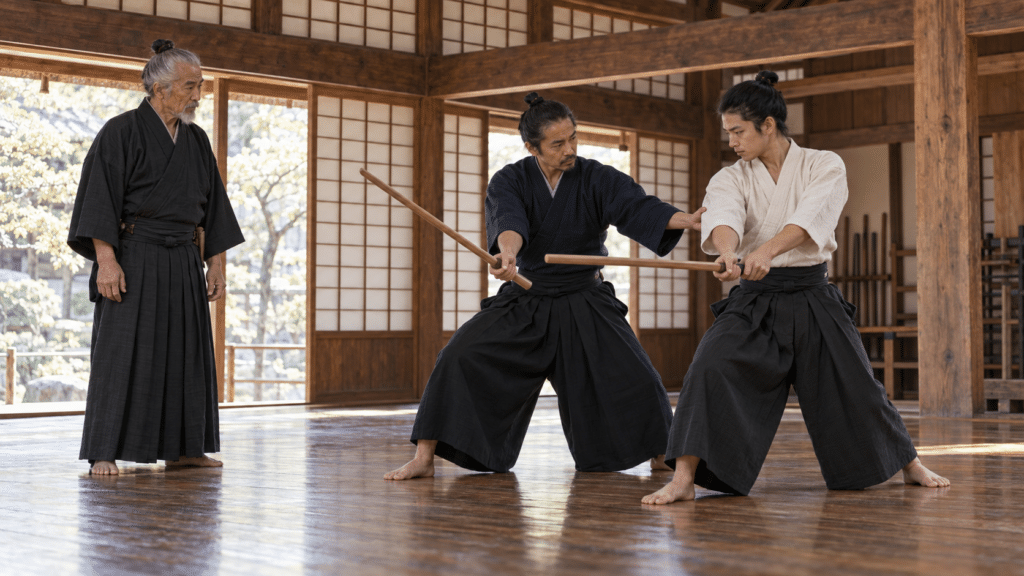
Long before force plates, motion-capture systems, and modern rehabilitation protocols, traditional Japanese martial lineages emphasized posture, balance, rhythm, and coordinated whole-body force transmission.
Power was not viewed solely as a product of isolated muscular effort. Timing and structural organization mattered.
Modern rehabilitation did not originate from these traditions, and the two should not be equated. The comparison does reveal an enduring principle: efficient movement depends on coordination as well as strength.
Technology now allows clinicians to examine that principle more precisely—observing where movement begins, where force is lost, and which tissue absorbs the consequence.
Local Care, Global Science
Patients throughout Fort Wayne and Northeast Indiana often arrive after faithfully completing therapy only to have symptoms return.
STAR Health applies principles from biomechanics, neuroscience, imaging, and rehabilitation science within a local, physician-directed model. The goal is not to criticize previous care or automatically repeat it.
The goal is to determine why improvement did not hold.
A time-rich evaluation may examine the original diagnosis, prior treatment response, movement patterns, neurologic findings, tissue capacity, activity demands, and recovery environment before another rehabilitation plan is prescribed.
Frequently Asked Questions
Why might physical therapy not be working?
The diagnosis may be incomplete, the exercise may not match the active pain generator, or the body may be compensating for dysfunction elsewhere. Load, timing, tissue tolerance, recovery, and nervous-system sensitivity can also affect progress.
Does unsuccessful therapy mean exercise is making me worse?
Not necessarily. A temporary symptom increase can occur during rehabilitation. Persistent or escalating symptoms, however, may indicate that the exercise selection, intensity, timing, or underlying diagnosis should be reassessed.
Should I stop physical therapy if pain continues?
Do not make that decision solely from generalized information. A clinician should determine whether the program should continue, be modified, paused, or replaced based on your diagnosis and response.
Do I need another MRI?
Not always. Additional imaging is useful only when it may clarify the diagnosis or change management. Existing studies may first need to be reinterpreted alongside the physical and neurologic examination.
Can physician-directed rehabilitation prevent surgery?
Appropriate rehabilitation may improve function and sometimes reduce or delay the need for invasive treatment. Avoiding surgery cannot be guaranteed, and certain conditions still require surgical evaluation.
What happens after failed physical therapy?
The next step is usually a diagnostic reassessment. This may include reviewing prior records, examining movement and neurologic function, evaluating load tolerance, and determining whether rehabilitation remains the correct tool.
When Exercise Isn’t the Whole Problem
If rehabilitation has not delivered durable improvement, repeating the same program may not reveal what was missed.
Evaluate the system around the pain.
📍 STAR Health — Fort Wayne, Indiana 🕒 Time-rich, physician-directed evaluation 📞 Schedule a comprehensive physical rehabilitation assessment