
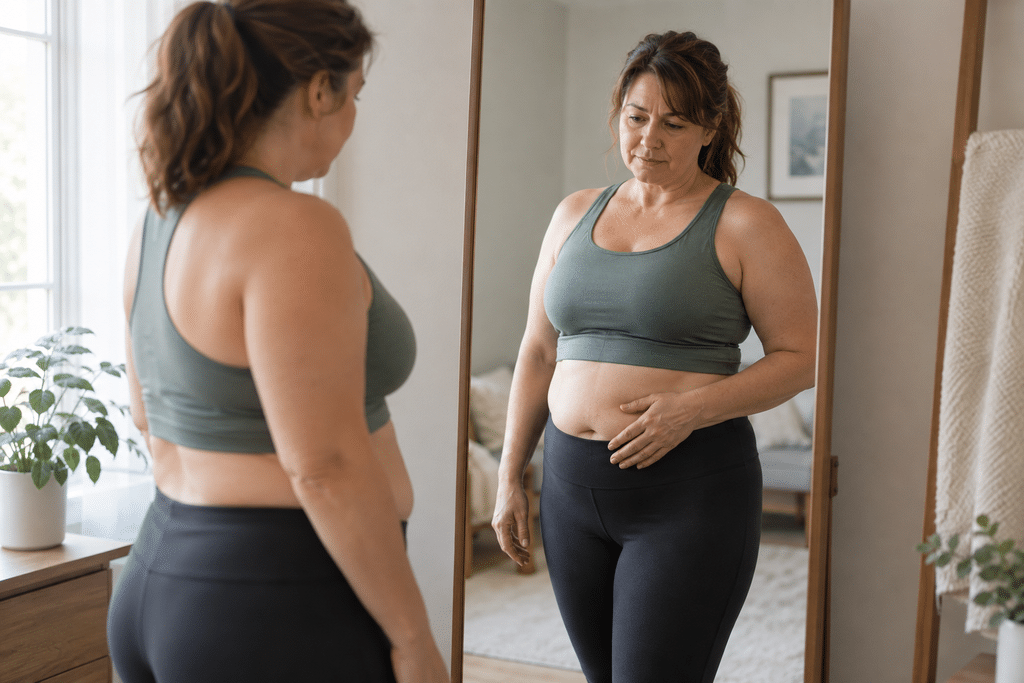
Did you ever wonder why two people can undergo similar fat-reduction treatments—yet see very different contours afterward?
One may notice a smoother silhouette. Another may see reduced volume but remain dissatisfied with laxity, waviness, or uneven definition.
The difference is not always the amount of fat reduced.
It may be the condition of the skin and connective-tissue system left behind.
At STAR Health, cryolipolysis is approached as more than isolated fat reduction. Changing subcutaneous volume also changes how skin, fascia, circulation, and surrounding tissues relate to one another. When those systems are not evaluated, a technically successful reduction in localized fat may still fall short of the patient’s visual goal.
Fat reduction and contour improvement are related—but they are not identical outcomes.
Fat Is a Mechanical Component, Not Just Stored Energy
Adipose tissue is biologically active, but it also occupies space within a layered mechanical system. Beneath the skin, it interacts with fibrous connective-tissue networks, local circulation, lymphatic pathways, and the deeper fascia.
Adipose tissue participates in:
- Volume and shape
- Load distribution
- Thermal insulation
- Hormonal and inflammatory signaling
- The relationship between skin and deeper structures
Cryolipolysis uses controlled cooling to affect targeted subcutaneous fat cells. Over time, the treated area may lose some of its volume as the body processes the affected cells.
But as volume changes, the tissue envelope must accommodate a different shape.
Skin with good elasticity may adapt relatively well. Skin affected by aging, pregnancy, major weight fluctuation, sun damage, surgery, or reduced collagen quality may respond differently. The procedure can reduce localized fat, but it cannot guarantee that every overlying tissue layer will contract into an ideal contour.
The Common Oversight in Standalone Cryolipolysis
A patient may begin with a simple goal: reduce a resistant pocket of abdominal, flank, thigh, or submental fat.
The hidden question is more important:
What will the surrounding tissue do after the volume changes?
If evaluation focuses only on fat thickness, several important variables can be missed:
- Baseline skin laxity
- Uneven fascial tension
- Previous surgical scarring
- Differences in tissue thickness across the treatment zone
- Limited dermal recoil
- Expectations that exceed what non-surgical treatment can reasonably provide
This is where apparent “failure” often occurs. The procedure may have changed the fat layer, yet the patient’s anticipated contour does not emerge.
That does not necessarily mean cryolipolysis failed biologically. It may mean the treatment plan did not sufficiently account for the structure, signaling, and load environment surrounding the target.
Patients considering treatment can learn more about STAR Health’s cryolipolysis approach and how it fits within a broader evaluation.
Clinical Visualization: What Remains After Volume Changes?
Imagine a tent whose interior support has changed.
Removing part of the underlying volume does not automatically reorganize the outer fabric. The final shape depends on the fabric’s elasticity, the placement of its anchors, the distribution of tension, and the condition of the supporting framework.
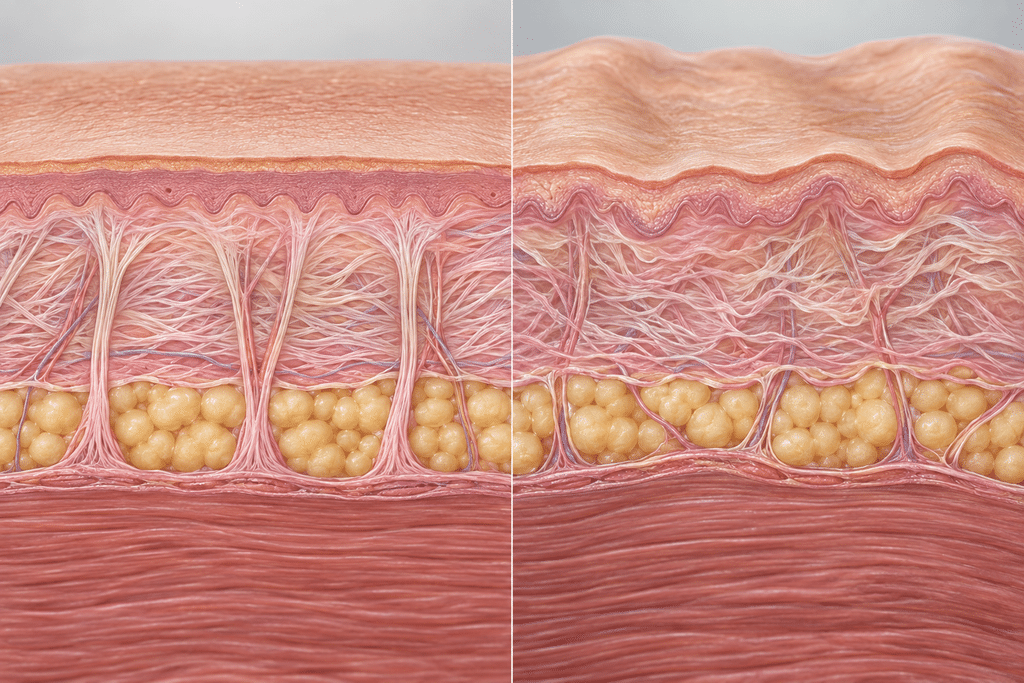
Human tissue is far more complex, but the principle is useful. After fat volume changes, contour may be influenced by:
- Collagen and elastin quality
- Fibrous septal organization
- Tissue hydration
- Microvascular support
- Lymphatic function
- Age-related changes in skin thickness
- The size and location of the treated area
This is why treatment planning should begin with an examination—not a package. The visible contour is produced by the entire tissue environment, not by the fat layer alone.
Clinical Insight: Reconditioning Is an Adjunct, Not a Guarantee
Clinical Insight: Fat reduction changes volume. Tissue reconditioning is intended to support how the surrounding soft-tissue system responds, but it cannot guarantee skin tightening or prevent laxity in every patient.
STAR Health may integrate pulsed or focused shockwave therapy when examination suggests that mechanical tissue stimulation could be useful.
Shockwave therapy delivers controlled acoustic energy into tissue. Depending on the device, dose, and clinical purpose, this mechanical input may influence local biological signaling and connective-tissue behavior. Research has explored extracorporeal shockwave therapy for several soft-tissue and aesthetic applications, including cellulite and skin-quality measures.
However, evidence for aesthetic applications remains indication-specific. It should not be assumed that shockwave therapy will reliably prevent loose skin after cryolipolysis or reproduce the effects of surgery.
The responsible goal is supporting tissue quality—not promising “tightening.”
Learn more about focused shockwave therapy and its role within diagnosis-guided care.
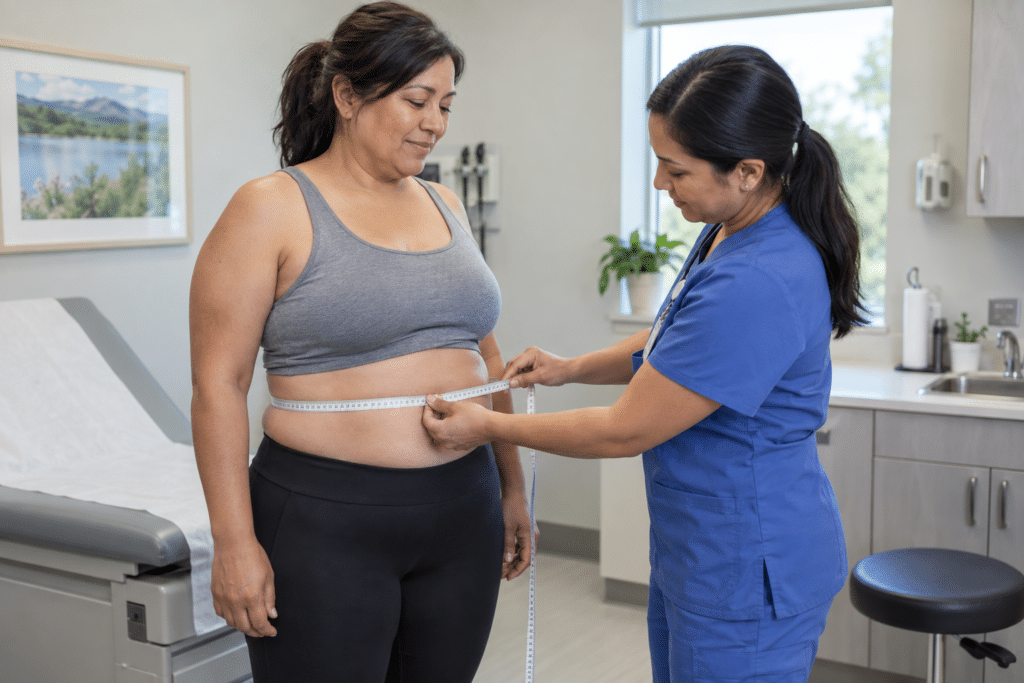
Evidence-Respecting, Physician-Led Care
Cryolipolysis is a non-surgical body-contouring procedure—not a treatment for obesity, a substitute for weight management, or a guaranteed method of tightening skin.
The FDA classifies contact-cooling systems used to disrupt adipose cells for non-invasive aesthetic purposes as medical devices subject to specific controls. Its guidance emphasizes appropriate indications, contraindications, temperature control, clinical evaluation, and disclosure of potential risks. Patients can review the FDA’s general information on contact-cooling systems for aesthetic use.
Possible effects and complications vary by device and patient. They can include temporary redness, swelling, bruising, tenderness, numbness, contour irregularity, thermal injury, and uncommon adverse responses. Individual screening is therefore essential.
Research also suggests that shockwave therapy can affect certain soft-tissue and aesthetic measures, but the evidence does not establish universal tightening or guaranteed contour durability. A recent peer-reviewed review indexed by PubMed discusses studied applications while reinforcing the need to interpret results by indication and treatment protocol.
Evidence should define the claim—not be stretched to support the marketing.
DID YOU KNOW?
A smaller fat layer does not automatically create tighter skin.
Cryolipolysis targets localized subcutaneous fat. Skin quality is influenced by different biological and mechanical variables, including age, collagen integrity, prior stretching, sun exposure, hormonal changes, and weight history.
This explains why two people receiving similar treatment may experience different visible outcomes—and why photographs or applicator measurements alone cannot determine candidacy.
Historical Perspective: Structure Responds to Mechanical Demand
Person: Julius Wolff
Place: Berlin, Germany
Time: Late nineteenth century
Julius Wolff became known for describing how bone architecture changes in response to mechanical loading.
Wolff’s work concerned bone, so it should not be treated as direct proof of how skin or fascia responds after cryolipolysis. Its broader historical lesson remains relevant: living tissues respond to their mechanical environment.
Modern mechanobiology has expanded that concept by examining how cells detect physical forces and translate them into biochemical signals—a process known as mechanotransduction.
Cryolipolysis changes local volume. Shockwave introduces a separate mechanical stimulus. Neither fact alone predicts the final contour. What matters is how the patient’s tissues respond over time.
Local Care, Global Science
Patients throughout Fort Wayne and Northeast Indiana may search for fat reduction without loose skin, medical cryolipolysis, body contouring without surgery, or cryolipolysis combined with skin treatment.
Those searches often begin with a device. A sound clinical process begins with the patient.
Evaluation may consider:
- The location and thickness of the fat layer
- Skin recoil and dermal quality
- Previous pregnancies or weight changes
- Scars, hernias, or prior procedures
- Cold sensitivity and relevant medical history
- The patient’s definition of a successful result
- Whether non-surgical treatment can reasonably meet that goal
Some patients may be appropriate candidates for cryolipolysis alone. Others may benefit from an integrated strategy. Some may be better served by a different option or by referral for surgical consultation.
Local care becomes meaningful when global science is translated into honest, individualized decisions.
Frequently Asked Questions
(Beaver Builder → FAQ Accordion | 5 Items)
Does cryolipolysis tighten loose skin?
Cryolipolysis is designed primarily to reduce localized subcutaneous fat. It should not be presented as a dependable skin-tightening procedure. Any visible change in skin appearance varies with baseline tissue quality, treatment area, and individual response.
Why might contour look uneven after fat reduction?
Contour can be influenced by applicator placement, differences in fat thickness, scars, fascial tension, skin laxity, and the amount of volume change. An examination is needed to distinguish residual fat from loose skin or structural asymmetry.
Can shockwave therapy prevent laxity after cryolipolysis?
It cannot guarantee prevention. Shockwave therapy may be used as an adjunct to provide controlled mechanical stimulation, but evidence does not support promising that it will eliminate loose skin or ensure a specific contour.
Who may be a poor candidate for cryolipolysis?
Candidacy depends on the device and treatment area. People with certain cold-sensitive disorders, impaired sensation, open wounds, some implants, or other relevant medical conditions may not be appropriate candidates. A clinician should review health history, medications, anatomy, and device-specific contraindications.
How many cryolipolysis or shockwave sessions will I need?
There is no universal number. Recommendations depend on the treatment area, tissue characteristics, patient goals, response to treatment, and the protocols appropriate to the specific device. More sessions do not guarantee a better result.
Schedule a Systems-Based Evaluation
If previous fat-reduction efforts did not produce the contour you expected—or if you are concerned about how your skin may respond—a physician-led evaluation can help identify the variables that matter before treatment begins.
STAR Health — Fort Wayne, Indiana
Time-rich, diagnostic-first consultation
Individualized cryolipolysis candidacy assessment
Connective-tissue strategy when clinically appropriate
Schedule your evaluation today.